

UNS N10276 (C276) parameters and uses
1 Overview
Alloy UNS N10276 (Alloy C276) is known for its corrosion resistance in various corrosive media. Due to its high molybdenum content, it is resistant to localized corrosion such as pitting. Because of the low carbon content, carbide precipitation is reduced to a low level during the welding process, so the resistance to intergranular corrosion in the heat-affected zone of the welded joint can be maintained. UNS N10276 is a wrought nickel-chromium-molybdenum material that reduces stress during welding due to its extremely low carbon and silicon content. Like other nickel alloys, it is ductile, easy to form and weld, and has good resistance to stress corrosion cracking in chloride-containing solutions (austenitic stainless steels are prone to such degradation). High in chromium and molybdenum, it is resistant to oxidizing and non-oxidizing acids and has excellent resistance to pitting and crevice corrosion in the presence of chlorides and other halides. Additionally, it is highly resistant to sulfide stress cracking and stress corrosion cracking in sour oilfield environments.
2applications
UNS N10276 is used in chemical processing, pollution control, pulp and paper, industrial and municipal waste treatment, and recovery of sour natural gas.
Applications in air pollution control include chimney liners, ducts, dampers, scrubbers, flue gas reheaters, fans and fan housings.
In chemical processing, alloys are used in components such as heat exchangers, reaction vessels, evaporators, transfer tubes and columns.
3 products
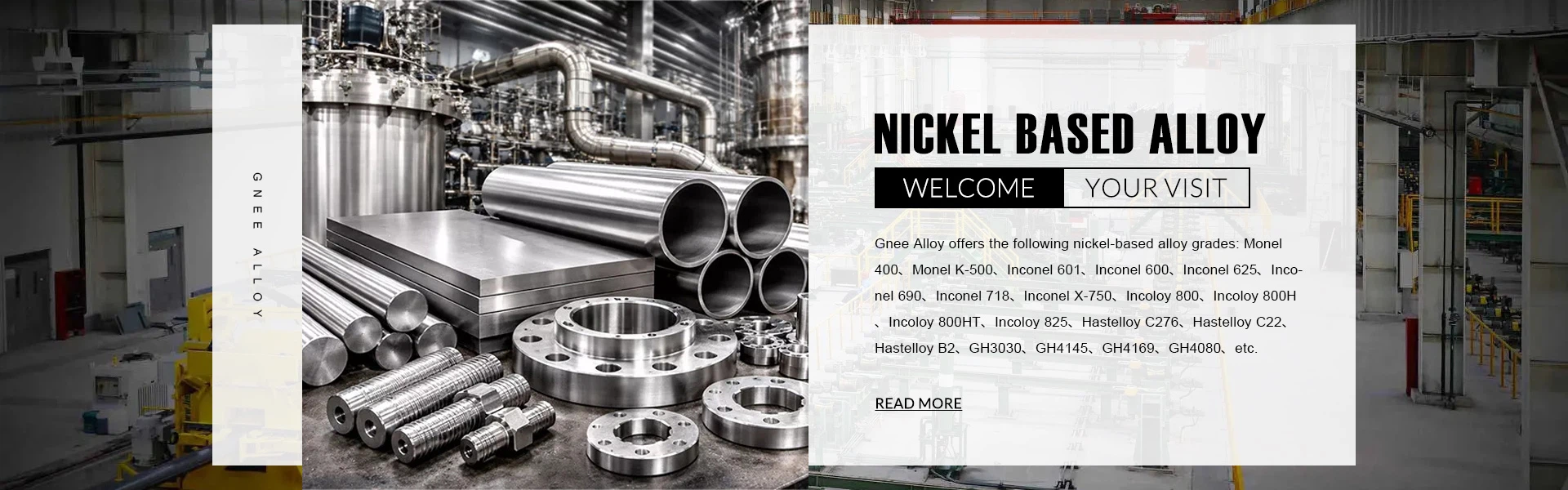
Plate, sheet, strip, billet, round bar, flat bar, hexagonal bar, wire, tube, forging, forged billet and cladding electrode.
Unless otherwise stated, supplies are in annealed condition.
4 ingredients
| Fe | Ni | Co | Cr | V | Mo | Cu |
| 4.0-7.0 | Bal. | ≤2.50 | 14.5-16.5 | ≤0.35 | 15.0-17.0 | ≤0.50 |
| C | W | Mn | Si | P | S | |
| ≤0.01 | 3.0-4.5 | ≤1.00 | ≤0.08 | ≤0.040 | ≤0.030 |


5 physical properties
Density: 8.89g/cm3
Melting point: 1325-1370℃
6 Corrosion resistance
C276 alloy can resist general corrosion, stress corrosion cracking, pitting corrosion and crevice corrosion in a wide range of harsh environments. During the welding process, its ability to resist carbide precipitation maintains the corrosion resistance of the heat-affected zone of the welded joint.
It has excellent resistance to sulfuric acid and hydrochloric acid. It is resistant to many severe media encountered in chemical processing, including reducing and oxidizing acids, highly oxidizing, neutral and acidic chlorides, solvents, formic and acetic acids, acetic anhydride, wet chlorine gas, hypochlorous acid and chlorine solutions. Has good resistance to phosphoric acid. Tests show corrosion rates of less than 5 mpy (0.13 mm/y) at all temperatures below the boiling point and concentrations below 65% wt%. C276 alloy has good seawater corrosion resistance, especially under crack conditions, it will corrode other commonly used materials such as 316 stainless steel, Monel 400, and Inconel 625.
7 heat treatment
Thermoforming should be between 1750-2250℉(954-1232℃) and all heavy duty molding should be above 2000℉(1090℃). Alloy C276 is usually annealed at 2050-2150℉ (1121-1175℃) and rapidly cooled by water quenching, etc. Unless otherwise specified, wrought products of C276 alloy are supplied in mill annealed (MA) condition. This annealing process was designed to optimize the corrosion resistance and ductility of the alloy. After all thermoforming operations, the material should be re-annealed to restore properties. The alloy should also be re-annealed after any cold forming that results in outer fiber elongation of 7% or greater. The annealing temperature is 1121°C (2050°F), and water quenching is recommended (quick air cooling is possible when the structure thickness is less than 10mm (0.375 inches)). Recommended hold time at annealing temperature is 10 - 30 minutes, depending on thickness of structure (thicker structures require 30 minutes).
8 processing
C276 alloy can be hot forged, hot rolled, hot pressed, hot extruded, and hot formed. However, compared with austenitic stainless steel, it is more sensitive to strain and strain rate and has a narrower thermal operating temperature range. For example, the recommended initial forging temperature for hot forging is 1232℃ (2250℉), and the recommended final forging temperature is 954℃ (1750℉). Moderate amounts of deformation and frequent heating can provide good results. This alloy is harder than most austenitic stainless steels and requires more energy during cold forming. Additionally, C276 alloy hardens more easily than most austenitic stainless steels and may require several passes of cold work and intermediate annealing. While cold working usually does not affect resistance to general corrosion, as well as pitting and crevice attack caused by chlorides, it can affect resistance to stress corrosion cracking. Therefore, in order to obtain better corrosion properties, re-annealing of cold-worked parts (when the fiber elongation reaches 7% or more) is important.
9 welding
Alloy C276 is well suited for gas metal arc welding (GMAW), gas tungsten arc welding (GTAW) and shielded metal arc welding (SMAWk). Matching filler metals (i.e. solid wires and coated electrodes) are available for these processes. C276 alloy has good weldability and can be widely used in welding. INCO-WELD® welding filler metal and electrode 686CPT is preferred where enhanced corrosion resistance of C-276 alloy is required.
10 Standard Specifications
ASME SB366 / ASTM B366 Accessories
ASME SB462 / ASTM B462 Bars, bars, forging blanks
ASME SB472 / ASTMB472 Nickel alloy billets and bars for forging
ASME SB564 / ASTM B564 Nickel Alloy Forgings
ASME SB574 / ASTMB574 Low carbon nickel alloy rods
ASME SB575 / ASTMB575 Low carbon nickel alloy plates, sheets and strips
ASME SB622 / ASTM B622 Nickel and nickel-cobalt alloy seamless pipes
ASME SB 829 / ASTM B829 Seamless Pipe
ASME SB983 / ASTM B983 Precipitation hardened or cold worked seamless nickel alloy pipe
AWS A5.11,ENiCrMo-4 welding rod


