

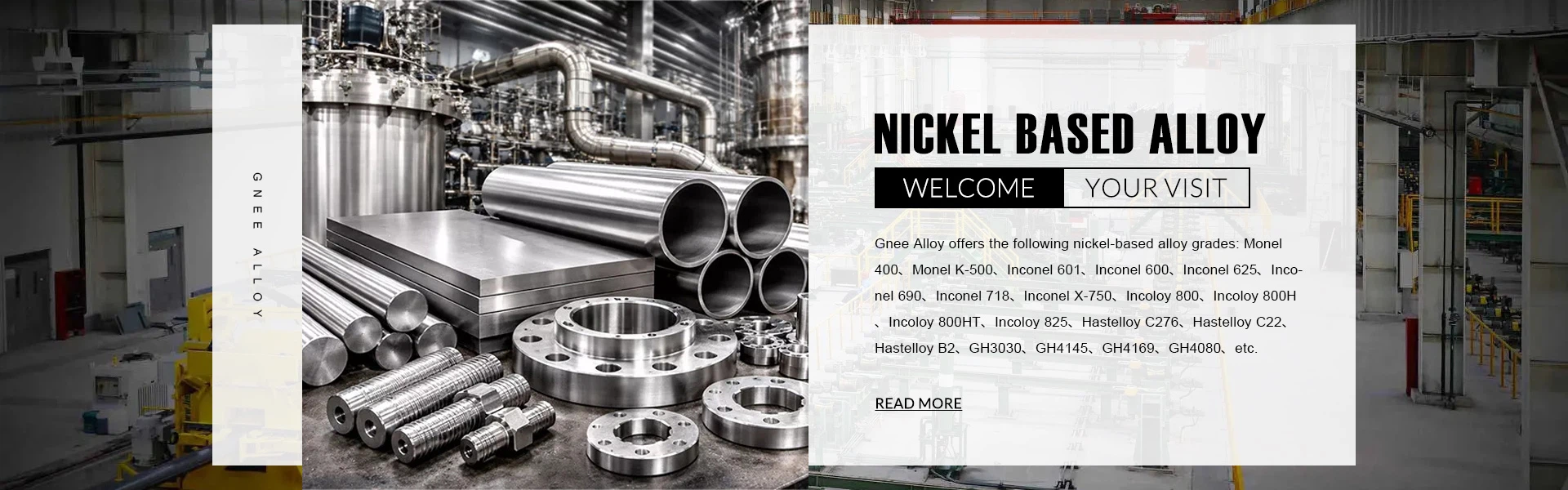
High-temperature oxidation properties of GH4169 and Inconel 617 nickel-based superalloys
Gnee Alloy
High-temperature oxidation properties of GH4169 and Inconel 617 nickel-based superalloys
GH4169 (Inconel 718) and Inconel 617 are nickel-based superalloys with excellent high-temperature resistance and oxidation resistance, making them suitable for extreme environments. However, their performance differs significantly. GH4169 is generally stable below 650°C, but scale/peeling occurs above 850°C; while Inconel 617 maintains excellent stability below 900°C, exhibiting instability only above 1100°C.
Gnee Alloy
What is GH4169 equivalent to?
Inconel 718
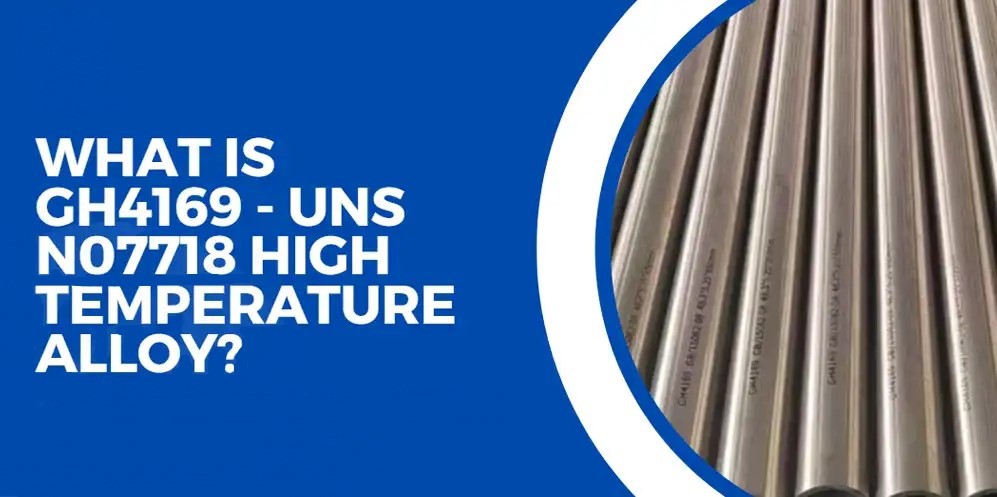
GH4169 is a high-strength nickel-based superalloy primarily used in aerospace and high-temperature applications. It is equivalent to: Inconel 718 (USA) Alloy 718 (UNS N07718).
1. Comparison of chemical composition of GH4169 and Inconel 617 (wt%)
| Element | GH4169 (Inconel 718) | Inconel 617 | Key Difference |
|---|---|---|---|
| Nickel (Ni) | 50.0 – 55.0 | 44.5 min (Balance) | Similar |
| Chromium (Cr) | 17.0 – 21.0 | 20.0 – 24.0 | Inconel 617 higher Cr |
| Cobalt (Co) | ≤ 1.00 | 10.0 – 15.0 | 617 contains significant Co |
| Molybdenum (Mo) | 2.80 – 3.30 | 8.0 – 10.0 | 617 has ~3x more Mo |
| Iron (Fe) | Balance (~18-20) | ≤ 3.0 | GH4169 has much higher Fe |
| Niobium (Nb) | 4.75 – 5.50 | – | GH4169 unique – γ″ former |
| Titanium (Ti) | 0.65 – 1.15 | ≤ 0.6 | GH4169 higher |
| Aluminum (Al) | 0.20 – 0.80 | 0.8 – 1.5 | Inconel 617 higher |
| Carbon (C) | ≤ 0.08 | 0.05 – 0.15 | Inconel 617 higher |
| Manganese (Mn) | ≤ 0.35 | ≤ 1.0 | – |
| Silicon (Si) | ≤ 0.35 | ≤ 1.0 | – |
| Phosphorus (P) | ≤ 0.015 | ≤ 0.015 | Similar |
| Sulfur (S) | ≤ 0.015 | ≤ 0.015 | Similar |
| Boron (B) | 0.002 – 0.006 | ≤ 0.006 | Similar |
| Copper (Cu) | ≤ 0.30 | ≤ 0.5 | – |
2. Comparison of room temperature mechanical properties of GH4169 and Inconel 617
| Property | GH4169 (718) (Aged) | Inconel 617 (Annealed) | Advantage |
|---|---|---|---|
| Tensile Strength, Ultimate (MPa) | ≥ 1275 (185 ksi) | ~750 (109 ksi) | GH4169 (~70% higher) |
| Tensile Strength, Yield (MPa) | ≥ 1035 (150 ksi) | ~345 (50 ksi) | GH4169 (~200% higher) |
| Elongation (%) | ≥ 12 | ≥ 45 | Inconel 617 |
| Reduction of Area (%) | ≥ 15 | ≥ 50 | Inconel 617 |
| Hardness | 35 – 40 HRC | ~89 HRB (~20 HRC) | GH4169 |
| Modulus of Elasticity (GPa) | ~200 | ~211 | Similar |
| Density (g/cm³) | 8.19 | 8.36 | GH4169 lighter |
Click to download the GH4169 alloy PDF file now
3. Performance of GH4169 and Inconel 617 at the 900°C limit
| Technical Metric | GH4169 (Alloy 718) | Inconel 617 (Alloy 617) | Commercial Impact |
| Matrix Base | Nickel-Chromium-Iron | Nickel-Cr-Cobalt-Mo | 617 has higher raw element value. |
| Strengthening | Precipitation (γ′′) | Solid Solution (Co-Mo) | 617 matrix does not "age" out. |
| Scaling Resistance | Moderate (Starts at 800°C) | Elite (Stable to 1100°C) | 617 prevents system pollution. |
| Creep Strength | Poor at 900°C | Elite at 900°C | 617 prevents thermal sagging. |
| Weldability | Excellent (Delayed aging) | Superior (Highly Ductile) | 617 is easier for field assembly. |
| Industrial Verdict | Dynamic Load <700°C | Thermal Service >850°C | Match the grade to the heat. |
Comparison of oxidation properties between GH4169 and Inconel 617
GH4169 (Inconel 718) Oxidation Properties
Oxidation Mechanism: A dense, protective surface oxide layer is formed, primarily composed of Cr₂O₃, and also contains other components such as TiNbO₄, FeNiO₄, Cr₂NiO, and Fe₂O₃.
Temperature Sensitivity: The oxide film is stable at 650°C. However, at 850°C or higher, the oxide film becomes porous, easily peels off, and its protective performance is significantly reduced.
Environmental Impacts: Stress accelerates oxygen diffusion, leading to oxidation-assisted intergranular cracking (OAIC) and grain boundary damage.
Microstructure Changes: High-temperature exposure (>650-850°C) causes coarsening of the γ'' strengthening phase and growth of the brittle β phase, thereby reducing the alloy's strength.
Oxidation Properties of Inconel 617 (Alloy 617)
Oxidation Resistance: Due to its solid solution-strengthened structure, it exhibits excellent high-temperature strength and oxidation resistance.
Temperature Behavior: It displays stable parabolic oxidation behavior at 900°C.
Extreme High Temperature: At 1100°C, chromium-rich surface oxides decompose, leading to accelerated oxidation of nickel and cobalt, accompanied by a significant reduction in grain boundary carbides.
Performance Indicators: Under tensile stress, oxidation damage is exacerbated, affecting creep resistance.

6. GH4169 and Inconel 617 Application Guidelines
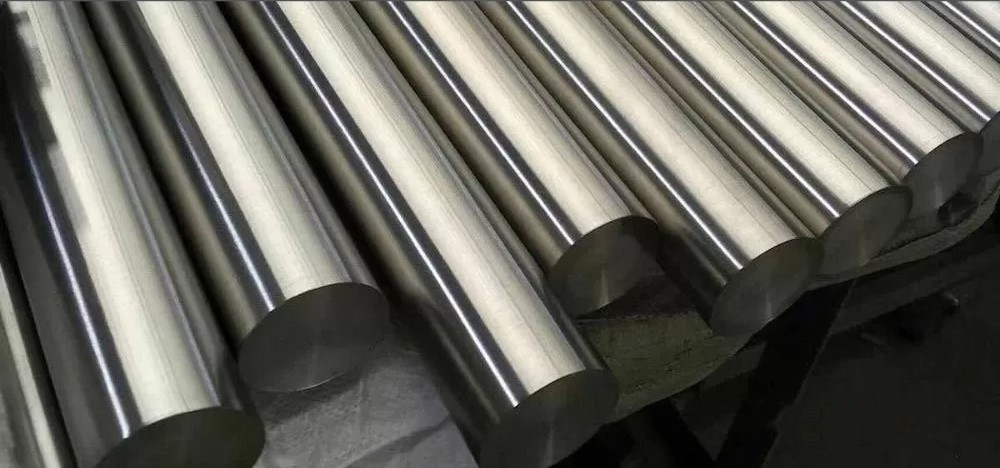
If your application involves high-speed rotating shafts or high-pressure bolts, and the operating temperature is strictly below 700°C (1292°F), you can order GH4169 tubing/bars. It is the most cost-effective solution for high-load mechanical applications.
If you are designing combustion tanks, transition linings, or high-temperature gas reactors operating at temperatures up to 900°C (1652°F), you can upgrade to Inconel 617 tubing/plates. In these applications, preventing scaling and creep failure is the only way to ensure industrial durability.
Why choose Tier 1 manufacturer Gnee Alloy?
✅️VIM + VAR Melting: Our GH4169 is produced via dual-vacuum melting to maximize fatigue life.
✅️Certified Compliance: Fully compliant with AMS 5662 / AMS 5596 (for 718) and ASME SB168 / ASTM B166 (for 617).
✅️MTC 3.1 Traceability: Full heat-analysis and creep-rupture test data included with every order.
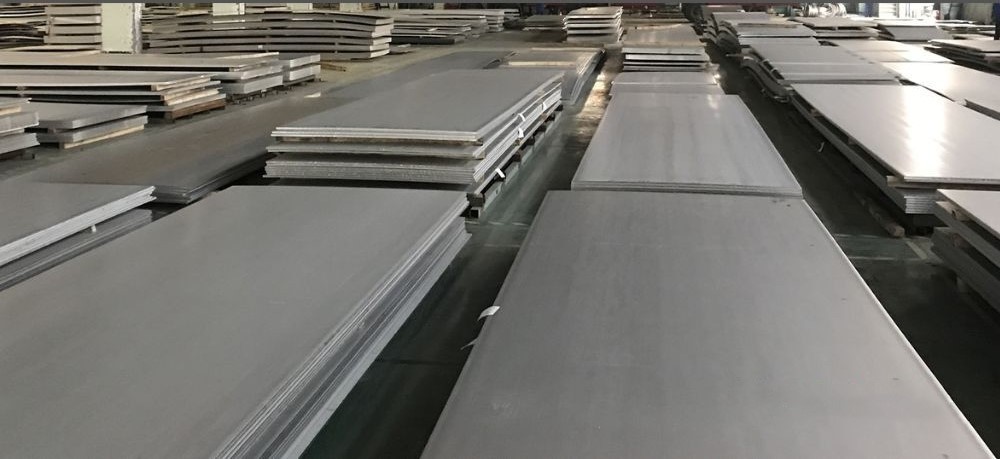
✅️Wholesale Inventory: Massive stock of bars, plates, and seamless tubes for Fast Global Shipping.

Gnee Alloy GH4169(inconel 718) Certificate
📦 Packaging and Shipping
All Nickel Based Alloy products are packaged using the following methods:
Wooden pallets or crates
Moisture-proof packaging
Labels with furnace number, standard, and size labels
Shipped worldwide by sea, air, or express
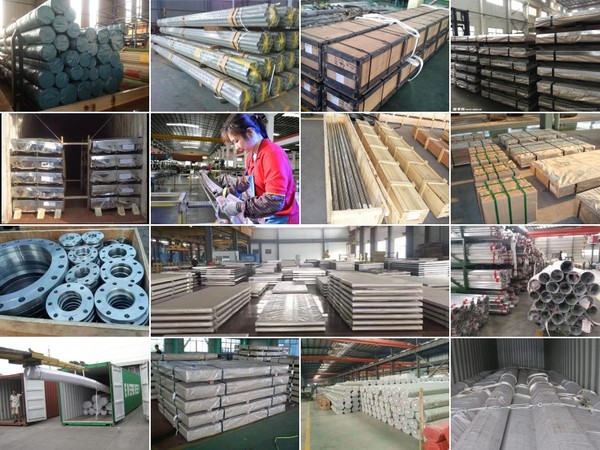
Gnee Alloy GH4169 Product Packing
Contact us for the latest export price quote for GH4169 Alloy
FAQ
Q1: Can I weld Inconel 617 directly to GH4169?
A: Yes. They have good metallurgical compatibility. We recommend using matching Inconel 617 (ERNiCrCoMo-1) filler metal to maintain joint stability across the different thermal expansion zones.
Q2: Will Inconel 617 contaminate my furnace environment?
A: No. This is its greatest strength. Because the oxide layer is "non-spalling," it provides a clean thermal service, making it ideal for high-purity petrochemical and energy processes.
Q3: Is GH4169 cheaper than Inconel 617?
A: Typically, yes. Inconel 617 contains high levels of Cobalt (Co), which is an expensive strategic metal. However, if GH4169 fails at 850°C, the replacement cost makes it the far more expensive choice.
Q4: Do you offer cut-to-size services for large plates?
A: Absolutely. We offer precision laser and waterjet Cut-to-Size blanks for both alloys, providing you with ready-to-assemble components.


