

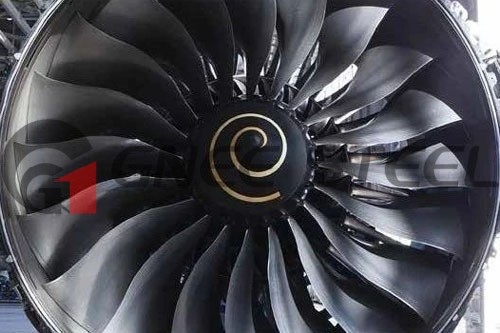
In the combustion chamber liner-a core component of aerospace turbines-the liner is subjected to extreme temperature fluctuations and mechanical stresses. For engineers and maintenance, repair, and overhaul (MRO) specialists, the most challenging problem is thermal fatigue cracking.
If the material cannot withstand rapid heating and cooling cycles, microcracks can form at cooling vents or welds, causing premature engine shutdown and resulting in millions of dollars in repair costs.
At Gnee Alloy, we eliminate all your concerns. We offer factory-direct supply of aerospace-grade sheet metal, GH4169 (equivalent to Inconel 718) and GH3536 (equivalent to Hastelloy X), ensuring your components reach their expected material life.
Click to get a GH4169 product quote
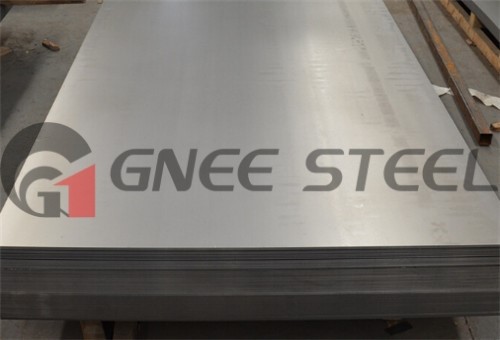
Comparison of GH4169 and GH3536 aerospace sheet: Applications in combustion chamber linings
GH4169 (equivalent to Inconel 718) and GH3536 (equivalent to Hastelloy X) are both nickel-based superalloys widely used in aerospace combustion chamber linings, but their applications differ due to their different strengthening mechanisms and temperature resistance. GH3536 is typically used in the hottest and most easily oxidized parts of the combustion chamber lining, while GH4169 is more suitable for structural components that need to maintain high yield strength at lower temperatures (maximum 650℃-700℃).
What is GH4169 equivalent to?
Inconel 718
GH4169 is a high-strength nickel-based superalloy primarily used in aerospace and high-temperature applications. It is equivalent to: Inconel 718 (USA) Alloy 718 (UNS N07718).
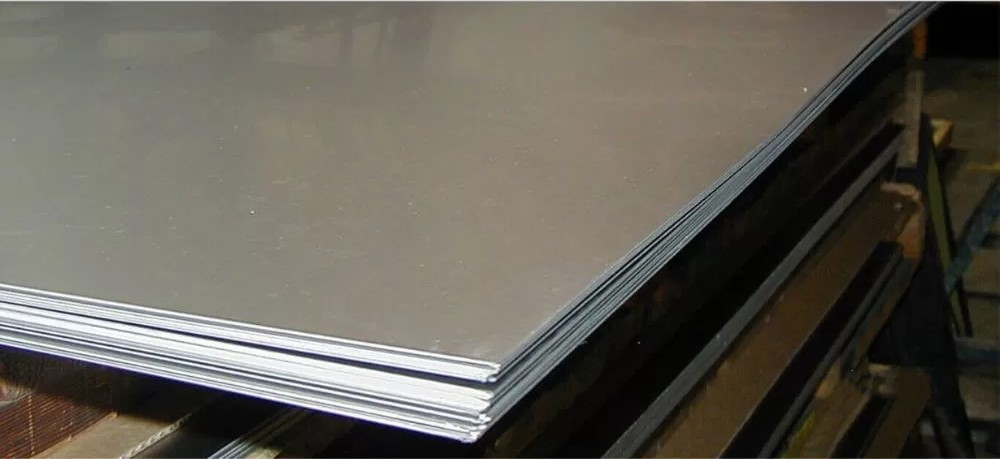
Performance information of GH3536 and GH4169 alloys

GH3536 (Hastelloy X) – Standard Material for "Combustion Chamber Liners"
Flame Tubes/Liners: Due to its excellent oxidation and corrosion resistance at high temperatures, GH3536 is the most commonly used sheet metal for flame tubes in gas turbine and aero-engine combustors.
High Temperature Stability: Maintains excellent structural integrity at 900°C and exhibits outstanding thermal stability, capable of withstanding extreme temperatures within the combustion chamber.
Welding and Machining: Possesses excellent weldability, crucial for manufacturing complex welded sheet metal components such as combustor liners and combustion chamber components.
GH4169 (Inconel 718) – "Structural" Components
Structural Liners: Used in applications requiring higher yield strength and lower temperatures (< 700°C), such as certain structural fasteners, rings or coolers, and outer combustion chamber shell components.
Fatigue Resistance: It possesses high fatigue strength and resistance to thermal fatigue, essential for components subjected to high stress-strain cycles.
Limitations: Although its strength is higher than GH3536, its strength drops sharply above 700°C, making it unsuitable for direct high-temperature inner flame tube lining.
1. Comparison of chemical compositions of GH3536 and GH4169 (Alloy 718) (wt%)
| Element | GH3536 (Hastelloy X) | GH4169 (Inconel 718) | Key Difference |
|---|---|---|---|
| Nickel (Ni) | Balance (~≥65) | 50.0 – 55.0 | GH3536 has higher Ni |
| Chromium (Cr) | 20.5 – 23.0 | 17.0 – 21.0 | GH3536 higher Cr |
| Iron (Fe) | 17.0 – 20.0 | Balance (~18-20) | Similar |
| Molybdenum (Mo) | 8.0 – 10.0 | 2.80 – 3.30 | GH3536 has ~3x more Mo |
| Cobalt (Co) | 0.5 – 2.5 | ≤ 1.00 | GH3536 contains Co |
| Tungsten (W) | 0.2 – 1.0 | – | GH3536 contains W |
| Niobium (Nb) | – | 4.75 – 5.50 | GH4169 unique – γ″ former |
| Titanium (Ti) | – | 0.65 – 1.15 | GH4169 unique |
| Aluminum (Al) | – | 0.20 – 0.80 | GH4169 unique |
| Carbon (C) | 0.05 – 0.15 | ≤ 0.08 | GH3536 higher C |
| Manganese (Mn) | ≤ 1.00 | ≤ 0.35 | GH3536 higher |
| Silicon (Si) | ≤ 1.00 | ≤ 0.35 | GH3536 higher |
| Phosphorus (P) | ≤ 0.040 | ≤ 0.015 | – |
| Sulfur (S) | ≤ 0.030 | ≤ 0.015 | – |
| Boron (B) | ≤ 0.010 | 0.002 – 0.006 | – |
Click to download the GH4169 alloy PDF file now
2. Comparison of room temperature mechanical properties of GH3536 and GH4169 (Alloy 718)
| Property | GH3536 (X) (Annealed) | GH4169 (718) (Aged) | Advantage |
|---|---|---|---|
| Tensile Strength, Ultimate (MPa) | ≥ 760 (110 ksi) | ≥ 1275 (185 ksi) | GH4169 (~68% higher) |
| Tensile Strength, Yield (MPa) | ≥ 355 (52 ksi) | ≥ 1035 (150 ksi) | GH4169 (~190% higher) |
| Elongation (%) | ≥ 40 | ≥ 12 | GH3536 |
| Reduction of Area (%) | ≥ 50 | ≥ 15 | GH3536 |
| Hardness | ~92 HRB (~20 HRC) | 35 – 40 HRC | GH4169 |
| Modulus of Elasticity (GPa) | ~205 | ~200 | Similar |
| Density (g/cm³) | 8.28 | 8.19 | GH4169 lighter |
3. Comparison of machinability of GH3536 and GH4169 (Alloy 718)
| Property | GH3536 (X) | GH4169 (718) | Advantage |
|---|---|---|---|
| Cold Formability | Good | Difficult | GH3536 |
| Hot Formability | Excellent (1000-1200°C) | Good (950-1150°C) | GH3536 |
| Weldability | Excellent (no PWHT) | Good (requires PWHT) | GH3536 |
| Machinability | Fair (~25% of 1% C steel) | Fair (~20% of 1% C steel) | GH3536 slightly better |
| Heat Treatment | Simple | Complex | GH3536 |
| Post-Weld Heat Treatment | Not required | Required | GH3536 |
4. GH4169 and GH3536 technology selection matrix
| Technical Feature | GH3536 (Hastelloy X) | GH4169 (Inconel 718) | Industrial Verdict |
| Strengthening Method | Solid Solution (Mo, W) | Precipitation (γ′′) | GH3536 is more thermally stable. |
| Max Service Temp | 1200°C (Oxidation Limit) | 700°C (Strength Limit) | GH3536 for extreme fire zones. |
| Fabricability | Superior (Excellent Weld) | Challenging (Work-hardens) | GH3536 saves assembly labor. |
| Thermal Fatigue | Elite (Resists Cracking) | Moderate | GH3536 extends MTBO. |
| Primary Use Case | Combustion Liners, Muffles | Rotating Rings, Fasteners | Match the alloy to the stress. |
| Standards | AMS 5536 / ASTM B435 | AMS 5596 / ASTM B670 | Certified Global Standards. |
5. Choosing Between GH3536 and GH4169
Reasons for choosing GH3536: Excellent oxidation resistance, higher operating temperature (>900℃), and outstanding weldability in high-temperature flame tubes.
Reasons for choosing GH4169: High yield strength, fatigue resistance, and creep resistance at moderate temperatures (<650℃).
Functional Graded Approach: Modern research shows that using functionally graded materials (FGMs) can optimize thermal stability and mechanical strength, transitioning from GH3536 at the high-temperature combustion end to GH4169 at the low-temperature structural end.
Why choose to source aerospace-grade sheet metal from Gnee Alloy?
✅️VIM + VAR melting: We utilize double-vacuum melting to ensure an ultra-clean microstructure with zero non-metallic inclusions.
✅️Precision Flatness Guarantee: Our cold-rolling process ensures "dead flat" sheets, essential for automated laser cutting of cooling holes.
✅️Full Traceability: Every order is delivered with a complete EN 10204 3.1 MTC and grain size verification (Level 8 or finer).
✅️Wholesale Inventory: We maintain a massive stock of standard aerospace thicknesses (0.5mm to 3.0mm) ready for Fast Global Shipping.
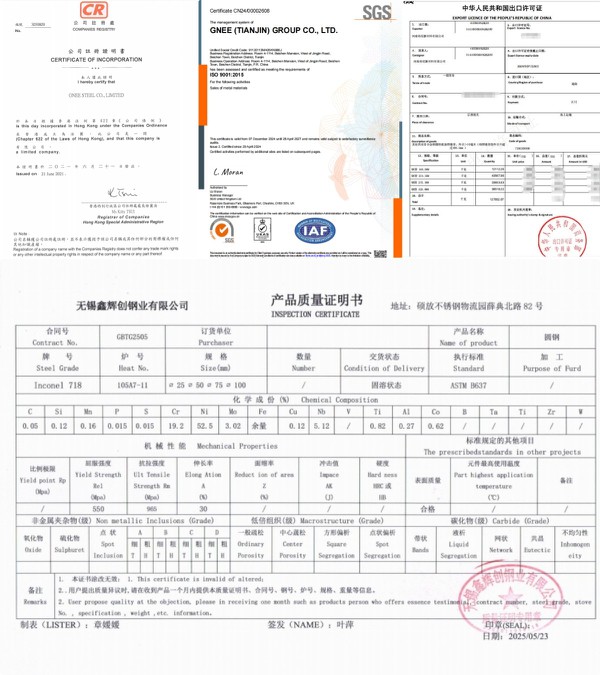
Gnee Alloy GH4169(inconel 718) Certificate
📦 Packaging and Shipping
All Nickel Based Alloy products are packaged using the following methods:
Wooden pallets or crates
Moisture-proof packaging
Labels with furnace number, standard, and size labels
Shipped worldwide by sea, air, or express
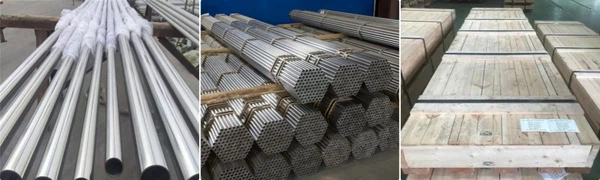
Gnee Steel GH4169 Product Packing
Contact us for the latest export price quote for GH4169 Alloy
FAQ
Q1: Can I weld GH4169 to GH3536 in a transition liner?
A: Yes. They have excellent metallurgical compatibility. We recommend using ERNiCr-3 filler metal to maintain joint stability across the thermal gradient.
Q2: Which alloy is more cost-effective for afterburner liners?
A: GH3536 (Hastelloy X) is generally more cost-effective for static heat resistance because it does not require the complex multi-stage aging heat treatments that GH4169 demands.
Q3: How do you prevent internal defects in thin 0.5mm aerospace sheets?
A: Every sheet undergoes 100% Surface Inspection and specialized ultrasonic testing (if required by standard). Our VIM+VAR process ensures the material is "clean" enough to avoid pinholes during deep drawing.
Q4: Do you offer cut-to-size blanks for stamping?
A: Yes. Our Custom Fabrication center provides precision laser-cut or waterjet-cut blanks based on your CAD drawings to reduce your material waste.


