

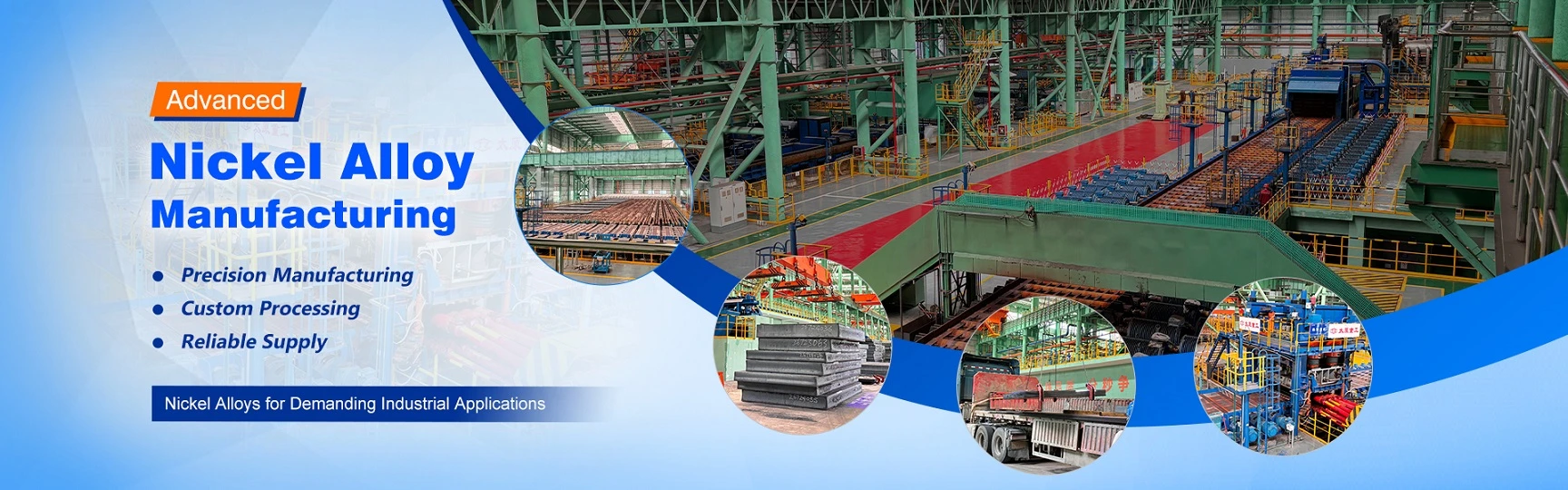
Gnee Steel is a professional manufacturer of Inconel 718 products. Gnee Steel's Inconel 718 product packaging includes: steel strapping: pipes with an outer diameter not exceeding 3 inches are typically bundled together with polypropylene film to prevent rusting during sea transport, then secured with steel straps; wooden crates/crates: pipes are usually packed in wooden crates or crates for protection during transport, especially for longer or larger diameter pipes; seaworthy export packaging: suppliers typically use standard seaworthy export packaging methods, which may include various materials and techniques to protect the pipes during transport; and tarpaulin packaging: to prevent rainwater, seawater, etc., from seeping into the export wooden crate packaging during transport. Gnee Steel also specializes in the production and sales of alloy materials. Gnee Steel's products are widely used in aerospace, chemical, power, automotive, and nuclear energy fields, and customized alloy material solutions can be provided according to customer needs.
Inconel 718 Hardness: Information Guide

Inconel 718 Hardness: Information Guide
Inconel 718 is a precipitation-hardening nickel-based superalloy widely used for its high strength, corrosion resistance, and ability to maintain mechanical properties at temperatures up to 700°C (1300°F). Its hardness is primarily adjusted through heat treatment (aging) to form strengthening phases ("α" and γ') that inhibit dislocation movement.
Is Inconel 718 difficult to machine?
This nickel-based superalloy is a common material in the aerospace industry, possessing excellent strength and heat resistance-but these very properties make it extremely difficult to machine. Inconel 718 is prone to rapid work hardening, generating extremely high temperatures at the tool-workpiece interface, thus accelerating tool wear.
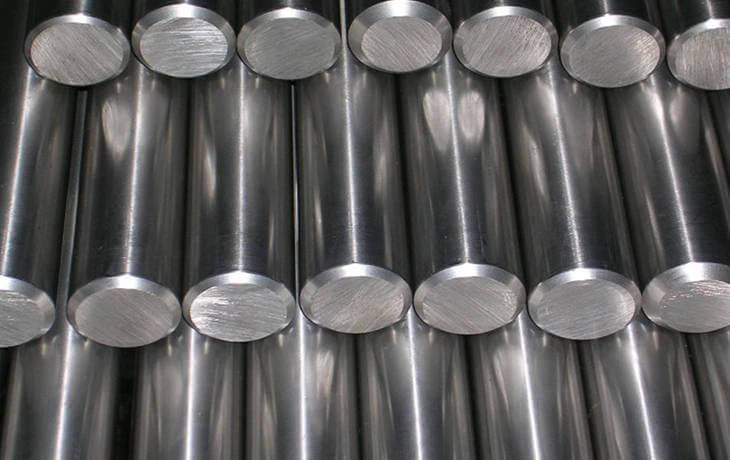
The hardness of Inconel 718 can be controlled by altering the material's state and heat treatment methods. The processing of this alloy changes its microstructure and internal phase composition, directly affecting its hardness and strength. For example, solution-annealed Inconel 718 typically has a hardness of 25-35 HRC, while precipitation-hardened materials can reach 36-45 HRC.
| Material Condition | Hardness (HRC) |
|---|---|
| Solution-Annealed | 25–35 |
| Precipitation Hardened | 36–45 |
Aging treatment forms fine γ′ and γ″ phases, which hinder dislocation movement and thus significantly increase the alloy's hardness. Understanding these strengthening mechanisms will help you select the appropriate process for your application.

Inconel 718 Hardness: Information Guide
Inconel 718 Hardness Overview
Typical Hardness Range of Inconel 718
The hardness value of Inconel 718 varies depending on the processing method. Its typical hardness range depends on whether solution annealing, aging treatment, or cold working is used. Typically, solution-annealed Inconel 718 has a hardness of approximately 20 HRC or 220 HV. Aging the alloy increases the hardness to 36–44 HRC or 360–450 HV. Combining cold working with aging treatment can further increase the maximum hardness to 45–50 HRC or 460–520 HV.
The table below summarizes the variation of Inconel 718 hardness with material state:
| Material Condition | Rockwell Hardness (HRC) | Vickers Hardness (HV) |
|---|---|---|
| Solution Annealed | ~20 | ~220 |
| Aged Condition | 36–44 | 360–450 |
| Cold Worked + Aged | 45–50 | 460–520 |
It is important to note that the hardness of Inconel 718 alloy also depends on its processing method. For example, cast Inconel alloy can reach a hardness of 408 HV, while samples formed by laser powder bed fusion have a hardness value between 296 and 349 HV. If direct energy deposition is used, the hardness value may vary even more.
Inconel 718 Hardness and Material Strength
In Inconel 718 alloys, higher hardness corresponds to higher yield strength.
The yield strength of aged materials can exceed 1100 MPa.
At room temperature, its ultimate tensile strength typically exceeds 1275 MPa (185 ksi).
At a Vickers hardness of 400 HV, its ultimate tensile strength is typically around 1250 MPa.
Machining Considerations
Due to the high strength and work-hardening properties of Inconel 718, machining it is relatively difficult.
Condition: Generally, machining is easier in the solution-annealed state.
Work Hardening: The material hardens during cutting, therefore requiring rigid fixtures, low cutting speeds, and sharp carbide tools.
Tool Wear: The low thermal conductivity causes heat to accumulate at the tool tip, resulting in rapid tool wear.
Gnee Steel also supplies custom Inconel 718 products in various sizes and specifications. Please send us your drawings for a quote!

About Gnee Steel
Gnee Steel is a professional manufacturer of nickel-based alloys, including Nickel 201, Nickel 202, Hastelloy C-276, Hastelloy C-22, Hastelloy B, Hastelloy C-4, Inconel 600, Inconel 625, Inconel 718, Inconel X-750, Incoloy 800, Incoloy 800H/HT, Incoloy 825, Monel 400, Monel K500, and other high-temperature alloy materials. We specialize in the production and sales of alloy materials. Gnee Steel's products are widely used in aerospace, chemical, power generation, automotive, nuclear energy, and other fields, and we can provide customized alloy material solutions according to customer needs. For inquiries about alloy material prices or customized alloy material solutions, please feel free to contact us via email at ss@gneemetal.com for a quote.
Square Meters Built
Enterprise Employees
Years Experience
Partner countries


