

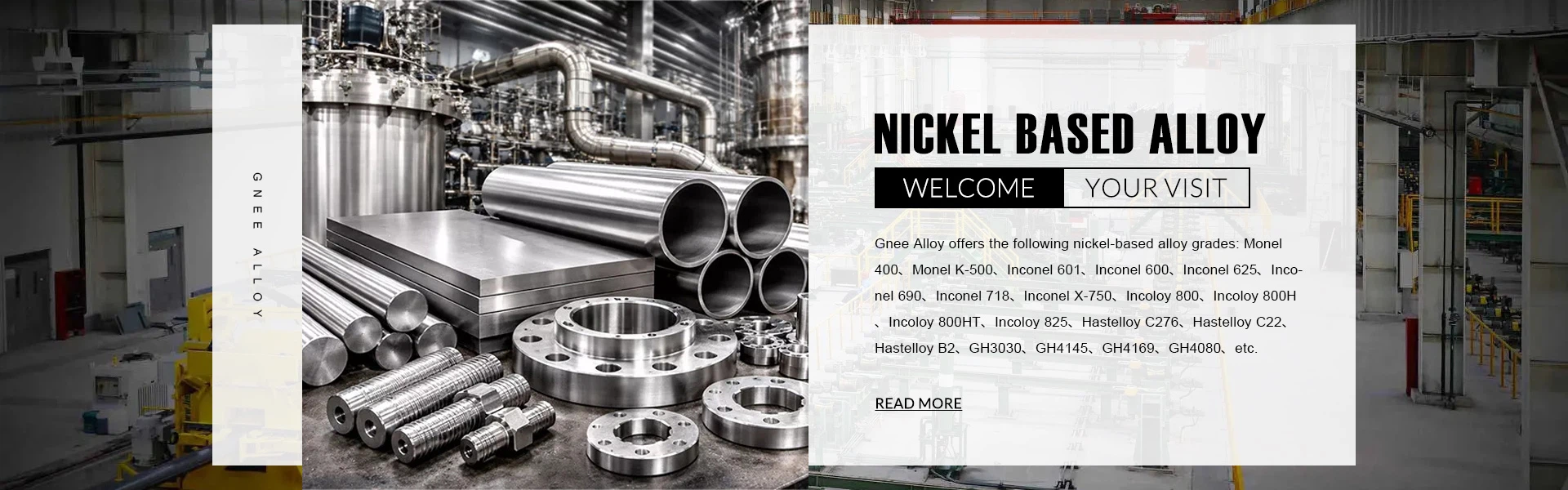
Hastelloy and 316L stainless steel are both common corrosion-resistant materials, but they have significant differences in chemical composition, corrosion resistance, mechanical properties and cost, so which material is better depends on the specific application scenario and usage requirements.

The following analyzes the differences and applicability of the two from multiple perspectives:
Hastelloy vs 316L stainless steel Composition and corrosion resistance
Hastelloy is a high-performance alloy based on nickel, containing a large amount of nickel, molybdenum, chromium and other elements, especially in strong acid, high temperature and harsh corrosive environments. It can withstand strong corrosive media such as hydrochloric acid, sulfuric acid, phosphoric acid, and can adapt to oxidizing and reducing environments.
Common grades such as Hastelloy C-276 and C-22 are particularly suitable for strong corrosion conditions in the chemical, petrochemical and pharmaceutical industries.
316L is an austenitic stainless steel containing 16-18% chromium, 10-14% nickel and 2-3% molybdenum. Compared with ordinary 304 stainless steel, 316L has better pitting and crevice corrosion resistance due to the addition of molybdenum, especially in chloride ion-containing media, but its corrosion resistance is far inferior to Hastelloy in strong acidic environments.
Hastelloy vs 316L stainless steel High temperature resistance
Hastelloy has excellent high temperature performance and can withstand working temperatures above 1000℃. It can also remain stable in high temperature oxidation and corrosive gas environments.
The heat resistance of 316L stainless steel is relatively weak and can usually only withstand working environments below 600℃. At high temperatures, 316L may oxidize or lose strength, which is not suitable for extreme high temperature applications.
Hastelloy vs 316L stainless steel Advantages and Disadvantages
- Advantages of Hastelloy
- Extremely strong corrosion resistance, suitable for harsh environments.
- Excellent high temperature performance.
- Excellent mechanical strength and ductility.
- Far superior to 316L in resistance to pitting, crevice corrosion and stress corrosion.
- Disadvantages: high cost and difficult processing.
- Advantages of 316L stainless steel
- Low cost and good economy.
- Corrosion resistance is better than ordinary stainless steel, suitable for mildly corrosive environments.
- Easy to process and weld.
- Disadvantages: Not suitable for strong corrosion and high temperature environments.
Hastelloy vs 316L stainless steel Cost
The cost of Hastelloy is much higher than that of 316L stainless steel, mainly due to its high nickel and molybdenum content and complex production process. Therefore, Hastelloy is mostly used for key components with high corrosion, high temperature and high strength, but not for large-scale, low-cost applications.
316L stainless steel is relatively cheap and is an economical corrosion-resistant material suitable for mass production and conventional working conditions.
Hastelloy vs 316L stainless steel Application areas
- Hastelloy
Hastelloy is mainly used in extremely corrosive environments, such as:
- Reactors, evaporators, and heat exchangers in the chemical industry.
- Highly corrosive medium containers and pipelines in the pharmaceutical industry.
- High temperature components in the aerospace and energy sectors.
- 316L stainless steel is widely used in mildly corrosive environments, such as:
- Food processing equipment.
- Medical devices, such as surgical instruments and implants.
- Architectural decoration and daily industrial products.


