

What is the difference between hastelloy C276 and 316l?
What is the difference between hastelloy C276 and 316l?
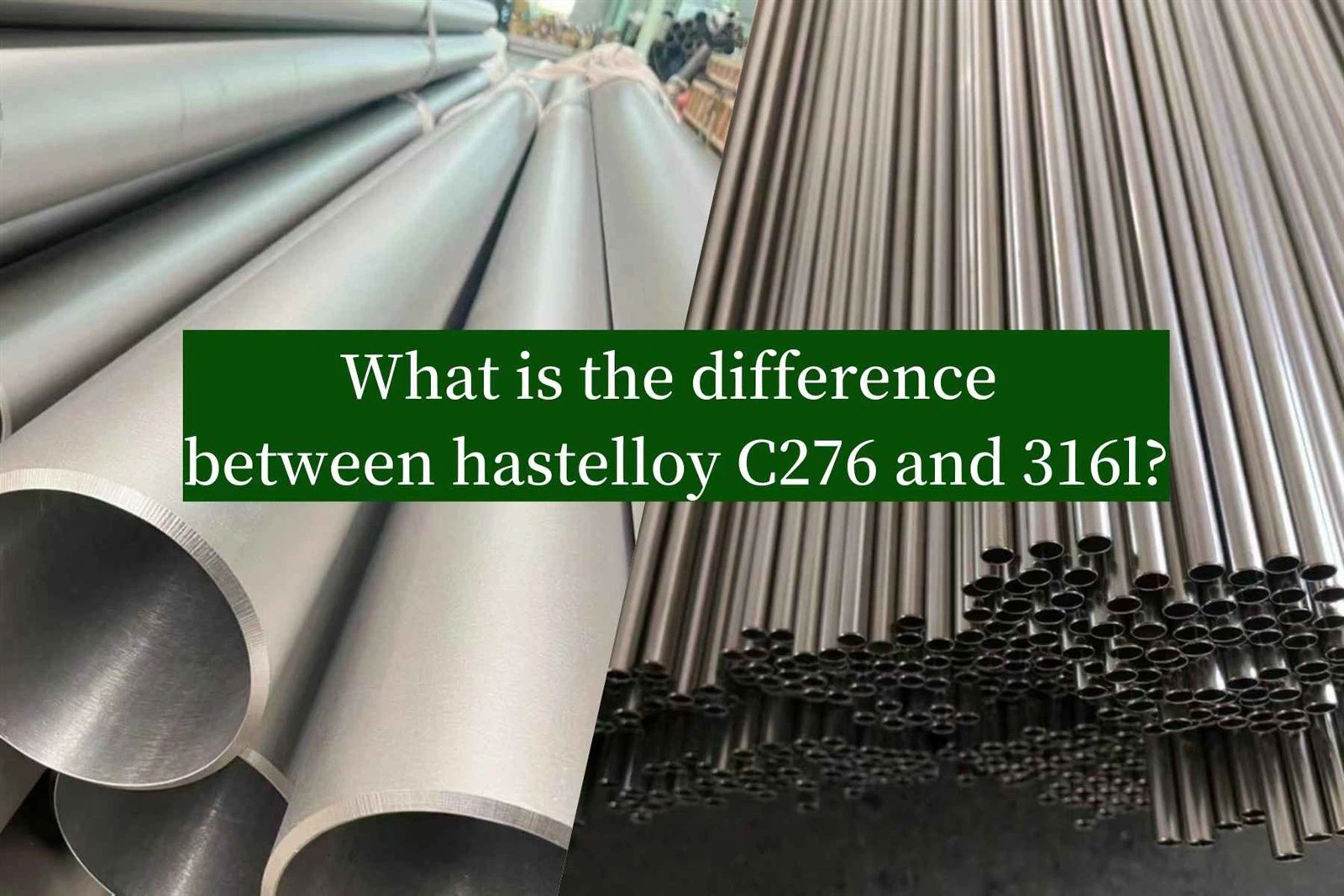
Hastelloy C276 is a high-nickel alloy that, due to its high molybdenum/tungsten content, offers exceptional corrosion resistance to corrosive chemicals (such as wet chlorine, oxidizing and reducing agents) and high temperatures, making it ideal for harsh environments. In contrast, 316L stainless steel is less expensive and offers good overall corrosion resistance under mild conditions (such as food processing and general marine environments), and excellent resistance to chlorides at lower temperatures. However, in strong acid environments where C276 performs exceptionally well, 316L stainless steel fails rapidly, primarily due to its lower nickel/molybdenum content and, in some forms of 316L stainless steel, higher carbon content.
What is the ASTM grade for Hastelloy C276 plates?
Hastelloy C276 plates conform to ASTM B575 standards. Plate dimensions range from 1000mm x 2000mm to 2000mm x 4000mm. UNS N10276 plates are available in thicknesses up to 75mm, while thin sheets are available in thicknesses up to 12mm.
.

Hastelloy C276 Alloy
C276 alloy is a nickel-molybdenum-chromium alloy renowned for its exceptional corrosion resistance, particularly in acidic environments. Known for its strength, durability, and good ductility, it finds widespread use in various fields, such as chemical processing, nuclear fuel reprocessing systems, oil and gas processing equipment, pharmaceutical manufacturing components, and electrical enclosures. Its extensive use in applications subject to extreme temperatures or corrosive solutions is a testament to its reliability and durability.
316 Stainless Steel
316 stainless steel is another widely used material that offers numerous advantages compared to other austenitic stainless steels. It exhibits excellent resistance to oxidation and sulfide corrosion and maintains good mechanical properties over a wide temperature range. Its high-temperature resistance makes it indispensable in heat exchangers, boilers, condensers, and piping systems. Furthermore, its good resistance to chlorides makes it an ideal choice for marine environments, where rapid corrosion poses a persistent challenge to other metallic materials.
Chemical Composition of Hastelloy C-276 vs 316L Stainless Steel
| Element | Hastelloy C-276 (UNS N10276) Content (%) | 316L Stainless Steel (UNS S31603) Content (%) |
|---|---|---|
| Iron (Fe) | ~5% | Balance (~65–70%) |
| Nickel (Ni) | ~57% (Balance) | 10–14% |
| Chromium (Cr) | ~16% | 16–18% |
| Molybdenum (Mo) | ~16% | 2–3% |
| Tungsten (W) | ~4% | – |
| Cobalt (Co) | ≤ 2.5% | – |
| Manganese (Mn) | ≤ 1% | ≤ 2% |
| Vanadium (V) | ≤ 0.35% | – |
| Silicon (Si) | ≤ 0.08% | ≤ 1% |
| Carbon (C) | ≤ 0.01% | ≤ 0.03% |
| Sulfur (S) | ≤ 0.03% | ≤ 0.03% |
| Phosphorus (P) | – | ≤ 0.045% |
| Nitrogen (N) | – | (Optional, typically ≤ 0.10%) |
| Copper (Cu) | – | (Optional, typically ≤ 0.75%) |
Corrosion Resistance – Differences Between Hastelloy C276 and 316L
Hastelloy C276 exhibits superior corrosion resistance in both oxidizing and reducing environments, making it an ideal choice for demanding conditions; while 316L stainless steel offers good corrosion resistance, suitable for less corrosive environments.
Hastelloy C276:
Oxidizing environments: Excellent corrosion resistance, effectively resisting corrosion from nitric acid and other strong oxidizing agents.
Reducing environments: Outstanding corrosion resistance, especially against sulfuric acid, hydrochloric acid, and phosphoric acid.
Pitting and crevice corrosion: Excellent corrosion resistance, maintaining good corrosion resistance even in high-temperature chlorine-containing environments.
Stress corrosion cracking: Extremely high corrosion resistance, minimizing the risk of failure due to stress in corrosive environments.
Special applications: Suitable for conditions where both oxidizing and reducing environments are present, effectively handling extreme temperatures and pressures.
316L Stainless Steel:
Oxidizing environments: Good corrosion resistance, suitable for atmospheric environments and weakly oxidizing environments.
Reducing environments: Moderate corrosion resistance, suitable for less corrosive environments and dilute acid environments.
Pitting and crevice corrosion: Good corrosion resistance, superior to 304 stainless steel, especially in chlorine-containing environments.
Stress corrosion cracking: Moderate corrosion resistance, suitable for less demanding applications.
Special applications: Suitable for marine environments, moderately corrosive chemical processing, and the food and pharmaceutical industries, striking a balance between performance and cost.
Mechanical Properties - Differences between Hastelloy C276 and 316L
Compared to 316L, Hastelloy C276 offers higher strength and better high-temperature performance, while 316L also exhibits good mechanical properties across a wide range of applications.
Hastelloy C276:
Strength: High tensile strength, ideal for high-stress applications.
Toughness: Maintains good mechanical properties at high temperatures.
Temperature Range: Effective in both low and high-temperature environments.
Formability: Good ductility, can be welded and formed using standard techniques.
Elastic Modulus: Higher elastic modulus provides better rigidity and structural integrity.
316L Stainless Steel:
Strength: Good tensile strength, sufficient for many industrial applications.
Toughness: Good impact resistance, suitable for various temperature ranges.
Temperature Range: Effective in medium and high-temperature environments, but with a narrower temperature range than Hastelloy C276.
Formability: Excellent formability and weldability, commonly used in manufacturing.
Elastic Modulus: Lower elastic modulus than Hastelloy C276, providing good flexibility for less demanding applications.
Application Areas - Differences Between Hastelloy C276 and 316L
Hastelloy C276 is used in highly corrosive and extreme environments, while 316L is suitable for a variety of less corrosive applications.
Hastelloy C276:
Chemical Processing: Commonly used in reactors, heat exchangers, and towers due to its resistance to severe corrosion.
Pollution Control: An ideal material for flue gas desulfurization systems.
Pulp and Paper: Performs excellently in bleaching plants and other corrosive environments.
Marine and Aerospace: Used in components exposed to seawater and high-temperature gas environments.
Specialized Equipment: Suitable for acidic gas applications and the oil and gas industry.
316L Stainless Steel:
Food Processing: Used in equipment and surfaces requiring high levels of hygiene.
Pharmaceuticals: An ideal material for equipment and containers due to its corrosion resistance and cleanliness.
Marine Applications: Suitable for ship fittings, coastal structures, and other marine environments.
Medical Devices: Commonly used in surgical instruments and implants due to its biocompatibility.
Construction: Popular in high-end buildings and structures due to its aesthetics and corrosion resistance.
Corrosion Resistance:
C276: Exhibits excellent corrosion resistance to strong reducing and oxidizing agents, wet chlorine gas, and high-temperature chlorides; performs exceptionally well in harsh chemical processing environments.
316L: Offers good general corrosion resistance and excellent resistance to chlorides at ambient/moderate temperatures, but is susceptible to corrosion by strong acids/halogens, where C276 performs superiorly.
Temperature Resistance:
hastelloy C276: Possesses excellent high-temperature strength and stability.
stainless steel 316L: Performs better than C276 in low-temperature environments.
Cost and Availability:
C276 Alloy: Higher price and limited availability.
316L Alloy: More cost-effective and widely available.
Why Choose Gnee as Your Nickel-Based Alloy Supplier
✅ Over 18 years of export experience, products sold to more than 80 countries
✅ Certified by ISO, SGS, and BV
✅ Global inventory of Inconel, Hastelloy, Incoloy, and Monel alloy tubing, plates, and bars
✅ Custom processing services available – including cutting, polishing, CNC machining, and packaging
✅ Fast delivery within 7-15 days, supported by global logistics partners
📦 Packaging and Shipping
All stainless steel products are packaged using the following methods:
Wooden pallets or crates
Moisture-proof packaging
Labels with furnace number, standard, and size labels
Shipped worldwide by sea, air, or express

About Gnee Steel
Gnee Steel is a professional manufacturer of nickel-based alloys, including Nickel 201, Nickel 202, Hastelloy C-276, Hastelloy C-22, Hastelloy B, Hastelloy C-4, Inconel 600, Inconel 625, Inconel 718, Inconel X-750, Incoloy 800, Incoloy 800H/HT, Incoloy 825, Monel 400, Monel K500, and other high-temperature alloy materials. We specialize in the production and sales of alloy materials. Gnee Steel's products are widely used in aerospace, chemical, power generation, automotive, nuclear energy, and other fields, and we can provide customized alloy material solutions according to customer needs. For inquiries about alloy material prices or customized alloy material solutions, please feel free to contact us via email at ss@gneemetal.com for a quote.
Square Meters Built
Enterprise Employees
Years Experience
Partner countries


