

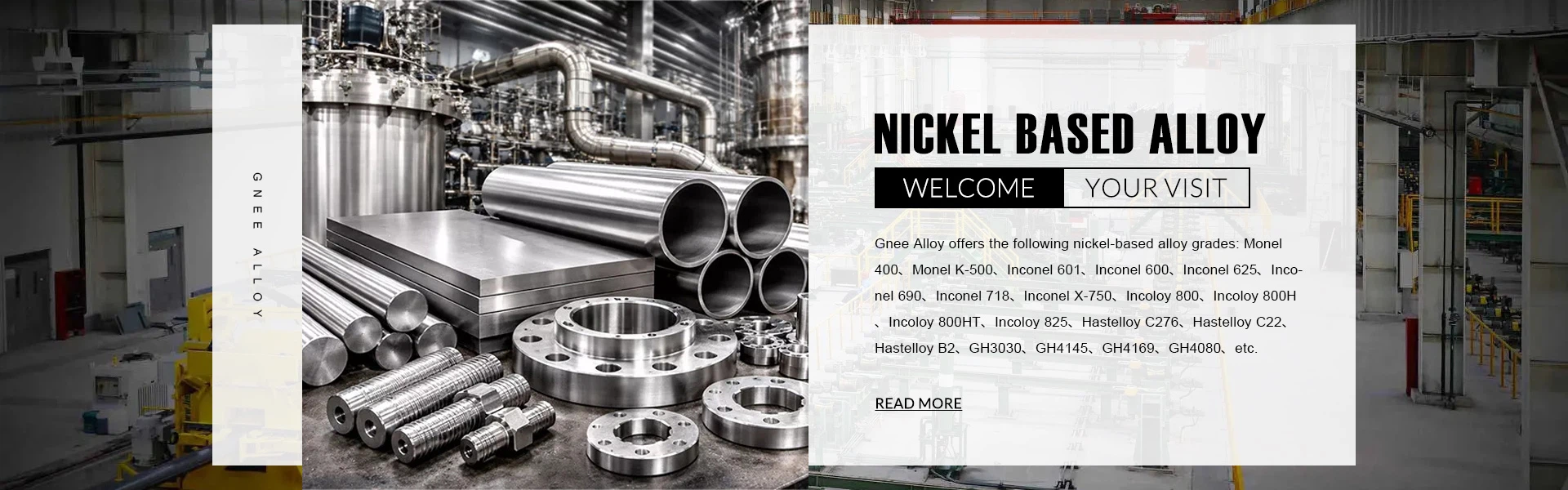
If you're looking for high-quality materials for your next project, a high-performance nickel alloy might be just what you need. The INCONEL range offers a variety of grades, ensuring there's one to meet your requirements.
INCONEL's flagship alloy is INCONEL 625, one of the most widely used materials to date. With its exceptional corrosion resistance and high strength, it's suitable for a wide range of applications across numerous industries. INCONEL 625 is widely popular, solving many material challenges for design engineers. Its extensive use for over 50 years speaks volumes about its superior quality.
However, if you prioritize high strength, INCONEL 725 might be a better fit. It's similar to INCONEL 625, especially in terms of corrosion resistance. However, there are some significant differences between the two that could influence your choice.
To help you understand the similarities and differences between these two excellent materials, we will compare their key characteristics and properties.
Differences in composition
The reason that INCONEL alloy 625 offers such a wide range of desirable properties lies in its unique make-up. It's a nickel-heavy alloy, with a minimum 58% of nickel in the blend. It also has chromium (20-23%) and molybdenum (8-10%), plus added niobium (3.15-4.15%).
The niobium combines with molybdenum and distorts the alloy's atomic matrix, imparting particularly high strength in annealed condition without a specific strengthening heat treatment. The high quantities of nickel and chromium together give the material its incredible corrosion resistance, withstanding highly corrosive elements and environments.
INCONEL alloy 725 shares many of these compositional elements – in fact, on the face of it, they are nearly identical. It retains a high quantity of both nickel (55-59%) and chromium (19-22.5%), plus molybdenum (7-9.50%). As such, the material has similar corrosion resistance to INCONEL alloy 625, making it suitable for use in a broad range of highly corrosive environments.
However, there are subtle differences in the overall composition of the two materials. INCONEL alloy 625 contains small amounts of cobalt and silver, which are not present in the mix for INCONEL alloy 725. INCONEL alloy 725 has a higher amount of titanium (1-1.7% as opposed to 0.4% maximum in INCONEL alloy 625) and iron makes up the balance, rather than having a 5% maximum as per INCONEL alloy 625. These small additions and differences allows for micro precipitates to form during the heat-treating process, which then gives INCONEL alloy 725 its hugely increased strength value.
Comparing strength
INCONEL alloy 625 is a strong nickel alloy. As mentioned, this is down to its composition and the effect of adding niobium. The blend of niobium with molybdenum produces a stiffening effect, negating the need for a precipitation-hardening treatment. For many applications, the high strength inherent in this material is more than adequate. It still outperforms many other nickel alloys in this area.
However, there are occasions when an even higher strength is required, but not at the sacrifice of the outstanding corrosion resistance. INCONEL alloy 625 was introduced and marketed as a solid solution strengthened alloy. It was found to be age hardenable, and over time it was subjected to various tests to study the effects of this. It was found that the age-hardening response was improved significantly by the addition of titanium. This led to the creation of a new alloy – what we know as INCONEL alloy 725 (find out more in this detailed report).
The strength of age-hardened INCONEL alloy 725 is somewhere in the region of twice the strength of annealed INCONEL alloy 625. As INCONEL alloy 725 is strengthened through heat treatment, not through cold working, it retains high ductility and toughness. This strength can be imparted to large and non-uniform sections of material that can't be strengthened by cold work.


Different applications
The choice of which material to go for often comes down to the intended final application of the alloy.
INCONEL alloy 625 is employed in a wide variety of industries, thanks to its versatility. For example, it is often used in sea-water applications due to its resistance against localised attack, such as pitting and crevice corrosion. It's also resistant to chloride-ion stress-corrosion cracking. As such, its applications include things like propeller blades for gunboats, submarine propulsion motors, exhaust ducts for Navy utility boats, and sheathing for undersea communication cables.
It is also a material of choice in the aerospace industry, where its high strength, high fatigue and excellent weldability are desirable assets. This includes uses in aircraft ducting systems, engine exhaust systems and fuel lines. Other industry applications include nuclear reactor components, and it's widely used in chemical processing plants.
INCONEL alloy 725 is also quite variously used across a number of industries, but it is chosen over INCONEL alloy 625 when its exceptionally high strength is required. In the collection of sour gas, for example – where an exceptional resistance to highly corrosive media is required – INCONEL alloy 725 is used for things like hangers, landing nipples, side pocket mandrels and polished bore receptacles.
Like INCONEL alloy 625, INCONEL alloy 725 is also used in the marine industry. Here it is a good choice for things like high-strength fasteners, where its extra strength is needed without sacrificing resistance to corrosion, pitting or crevice attack.
Our product range
| Product Form | Standard Specifications & Dimensions | Common Alloys (Examples) | Typical Standards |
|---|---|---|---|
| Bar & Rod | Round Bar: Diameter: 3mm ~ 300mm Hexagon Bar: Across Flats: 5mm ~ 100mm Square Bar: Width: 5mm ~ 150mm Length: Random, Cut-to-length, or Coils (small diameters) |
Alloy 200/201 Monel 400/K-500 Inconel 600/601/625/718 Incoloy 800/800H/825 Hastelloy C-276/C-22/B-2/B-3 |
ASTM B160, B164, B166 EN/DIN 2.4066, 2.4816, 2.4851 ASME SB-166, SB-167 |
| Wire | Diameter: 0.1mm ~ 12mm Form: Coils, spools, or straight lengths Finish: Bright, pickled, annealed |
Alloy 200/201 Inconel 600/625/X-750 Incoloy 825 |
ASTM B166, B167 EN/DIN 17752 |
| Sheet & Plate | Thickness (Sheet): 0.1mm ~ 5.0mm Thickness (Plate): 5.0mm ~ 100mm+ Width: Up to 2000mm (depending on alloy/thickness) Length: Up to 6000mm or as required |
Alloy 200/201 Monel 400 Inconel 600/625/718 Incoloy 800H/825 Hastelloy C-276 |
ASTM B162, B168, B409 EN/DIN 17742, 17744 |
| Strip & Foil | Thickness (Strip): 0.05mm ~ 2.0mm Thickness (Foil): 0.02mm ~ 0.05mm Width: Up to 600mm Condition: Cold rolled, annealed, tempered |
Alloy 200/201 Inconel 600/625 Incoloy 825 |
ASTM B162, B168 |
| Pipe & Tube | Seamless Pipe (ASTM B161/B167): - OD: 3/16" ~ 14" (6mm ~ 355mm) - Schedule: SCH 5S to XXS Welded Tube (ASTM B163/B516): - OD: 6mm ~ 300mm - Wall Thickness: 0.5mm ~ 10mm |
Alloy 200/201 Monel 400 Inconel 600/625 Incoloy 800H/825 Hastelloy C-276 |
ASTM B161, B163, B167, B516 ASME SB-163, SB-167 |
Get the complete product catalog
Our factory and testing
Our core factory and collaborative production system are equipped with modern precision cutting, processing, and heat treatment equipment, focusing on transforming raw materials into semi-finished and finished products that meet stringent standards. To ensure that every batch of materials meets or exceeds specifications, we have established a comprehensive end-to-end quality inspection system. From material properties analysis (PMI) upon raw material warehousing to dimensional accuracy control during production, and finally to mechanical property testing (such as tensile strength and hardness) and non-destructive testing before final shipment, every step is rigorously controlled by our professional quality inspection team. We promise to provide an authoritative, online-verifiable original manufacturer's material certificate (MTC 3.1) for every order, and can arrange for third-party certification bodies (such as SGS, BV, and TUV) to conduct on-site inspections and issue certificates upon customer request.


