

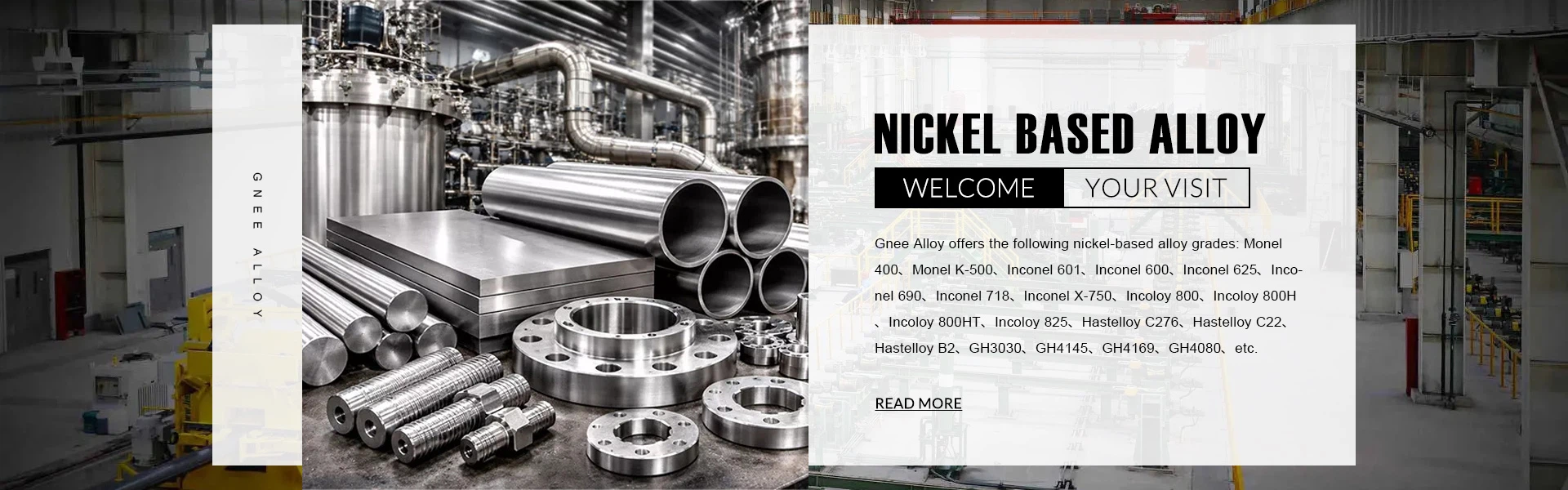
When it comes to high-performance nickel-based alloys, Inconel 625 and Inconel 718 are among the most popular choices in industries such as aerospace, marine, chemical processing, and power generation. Both alloys are known for their exceptional strength, corrosion resistance, and ability to withstand extreme environments. However, despite their similarities, they have distinct properties that make each better suited to specific applications. In this article, we explore Inconel 625 vs 718: what's the difference? - helping you make informed decisions when selecting materials for your next project.
What are Inconel Alloys?
Inconel is a registered trademark series of nickel-chromium-based superalloys designed for high-strength, high-temperature, and corrosive applications. These alloys are commonly used in environments where ordinary steel and other metals would fail due to high temperatures, oxidation, or chemical corrosion.
Inconel 625 and 718 are both precipitation-hardening alloys, but their composition, mechanical properties, and optimal applications differ. Suppliers like GNEE provide these alloys to stringent standards, ensuring reliable operation in the most demanding industries.
Chemical Composition: The Foundation of Difference
Inconel 625
Inconel 625 is primarily composed of:
Nickel (Ni): ~58% minimum
Chromium (Cr): ~20-23%
Molybdenum (Mo): ~8-10%
Niobium (Nb): ~3-4%
Small amounts of iron, manganese, silicon, aluminum, and titanium
The high molybdenum and niobium content enhances Inconel 625's corrosion resistance and strength without the need for precipitation hardening.
Inconel 718
Inconel 718 contains:
Nickel (Ni): ~50-55%
Chromium (Cr): ~17-21%
Iron (Fe): ~17%
Niobium (Nb): ~4.75-5.5%
Molybdenum (Mo): ~2.8-3.3%
Titanium and aluminum: ~0.7-1.15% combined
What sets Inconel 718 apart is its ability to be precipitation hardened through the formation of gamma prime (γ') and gamma double prime (γ") phases, significantly increasing its strength.
Mechanical Properties: Strength and Performance
Tensile and Yield Strength
Inconel 625: Tensile strength ~827 MPa (120 ksi), yield strength ~414 MPa (60 ksi)
Inconel 718: Tensile strength ~1379 MPa (200 ksi), yield strength ~1034 MPa (150 ksi)
Inconel 718 offers significantly higher tensile and yield strength due to its precipitation-hardened microstructure.
Temperature Range
Inconel 625 performs well up to about 982°C (1800°F) while retaining excellent corrosion resistance.
Inconel 718 maintains high strength up to around 704°C (1300°F). Above this, its strength advantage diminishes as the precipitates lose effectiveness.
For high-strength applications below 704°C, Inconel 718 is superior; for higher temperature corrosion resistance, Inconel 625 has the edge.
Fatigue and Creep Resistance
Inconel 718 is renowned for its excellent fatigue strength and creep resistance at intermediate temperatures.
Inconel 625 provides good fatigue resistance but is better valued for its corrosion resistance and weldability.


Corrosion Resistance
One of Inconel 625's greatest strengths is its superior corrosion resistance:
Excellent resistance to pitting, crevice corrosion, and stress-corrosion cracking in chloride environments.
Exceptional resistance to seawater and chemical media like acids.
Inconel 718 also offers good corrosion resistance but is not as resistant as 625 in highly corrosive or marine environments.
Summary: When corrosion resistance is the top priority, Inconel 625 is the preferred alloy.
Weldability and Fabrication
Inconel 625 is known for its outstanding weldability. It can be welded without concern for post-weld cracking, making it ideal for complex fabrications and repairs.
Inconel 718 requires precise heat treatment and careful control during welding to prevent cracking or degradation of properties. Post-weld heat treatment is typically required to restore properties.
Summary: Inconel 625 is generally easier to weld and fabricate, offering greater flexibility in manufacturing and repair.
Applications: Where Each Alloy Shines
Inconel 625 Applications
Marine hardware and seawater components
Chemical processing equipment handling aggressive media
Heat exchangers and condenser tubing
Flue gas scrubbers
Aerospace ducting systems
Flexible metal hose and bellows
Inconel 718 Applications
Aircraft engine components (discs, fasteners, casings)
Gas turbines
Rocket motors and nuclear fuel element spacers
High-strength fasteners and bolts
Downhole tools in oil and gas industries
Summary: Inconel 718 is chosen for high-strength, high-fatigue applications at moderate temperatures, while Inconel 625 is ideal where corrosion resistance and ease of fabrication are critical.
Cost Considerations
Inconel 718 typically costs more to produce because of:
Additional alloying elements
Complex heat treatment processes
More challenging fabrication requirements
In contrast, Inconel 625's simpler processing often makes it a more cost-effective choice where ultra-high strength is not required.
Summary: If strength is paramount, Inconel 718 justifies its higher cost. For corrosion resistance and cost efficiency, Inconel 625 offers better value.
Selecting Between Inconel 625 and 718
When deciding between these two alloys, consider:
Operating conditions: What temperatures, stresses, and corrosive agents will the material face?
Mechanical demands: Is high strength or fatigue resistance essential?
Fabrication requirements: Will the part require complex forming or welding?
Service environment: Will the component be exposed to aggressive chemicals or seawater?
Budget constraints: Can the higher cost of Inconel 718 be justified by the performance benefits?
Conclusion
Inconel 625 vs 718: what's the difference? The answer lies in their fundamental material properties and intended applications:
Inconel 718: Superior strength, fatigue resistance, and creep resistance at moderate temperatures. Ideal for high-stress aerospace, turbine, and power generation components.
Inconel 625: Outstanding corrosion resistance, ease of welding, and excellent performance at elevated temperatures. Perfect for marine, chemical, and high-corrosion environments.
Both alloys represent the pinnacle of nickel-based superalloy technology, but the right choice depends on your specific project needs. For expert guidance and premium alloy solutions, trust GNEE to help power your success.
Our product range
| Product Form | Standard Specifications & Dimensions | Common Alloys (Examples) | Typical Standards |
|---|---|---|---|
| Bar & Rod | Round Bar: Diameter: 3mm ~ 300mm Hexagon Bar: Across Flats: 5mm ~ 100mm Square Bar: Width: 5mm ~ 150mm Length: Random, Cut-to-length, or Coils (small diameters) |
Alloy 200/201 Monel 400/K-500 Inconel 600/601/625/718 Incoloy 800/800H/825 Hastelloy C-276/C-22/B-2/B-3 |
ASTM B160, B164, B166 EN/DIN 2.4066, 2.4816, 2.4851 ASME SB-166, SB-167 |
| Wire | Diameter: 0.1mm ~ 12mm Form: Coils, spools, or straight lengths Finish: Bright, pickled, annealed |
Alloy 200/201 Inconel 600/625/X-750 Incoloy 825 |
ASTM B166, B167 EN/DIN 17752 |
| Sheet & Plate | Thickness (Sheet): 0.1mm ~ 5.0mm Thickness (Plate): 5.0mm ~ 100mm+ Width: Up to 2000mm (depending on alloy/thickness) Length: Up to 6000mm or as required |
Alloy 200/201 Monel 400 Inconel 600/625/718 Incoloy 800H/825 Hastelloy C-276 |
ASTM B162, B168, B409 EN/DIN 17742, 17744 |
| Strip & Foil | Thickness (Strip): 0.05mm ~ 2.0mm Thickness (Foil): 0.02mm ~ 0.05mm Width: Up to 600mm Condition: Cold rolled, annealed, tempered |
Alloy 200/201 Inconel 600/625 Incoloy 825 |
ASTM B162, B168 |
| Pipe & Tube | Seamless Pipe (ASTM B161/B167): - OD: 3/16" ~ 14" (6mm ~ 355mm) - Schedule: SCH 5S to XXS Welded Tube (ASTM B163/B516): - OD: 6mm ~ 300mm - Wall Thickness: 0.5mm ~ 10mm |
Alloy 200/201 Monel 400 Inconel 600/625 Incoloy 800H/825 Hastelloy C-276 |
ASTM B161, B163, B167, B516 ASME SB-163, SB-167 |
Get the complete product catalog
Our factory and testing
Our core factory and collaborative production system are equipped with modern precision cutting, processing, and heat treatment equipment, focusing on transforming raw materials into semi-finished and finished products that meet stringent standards. To ensure that every batch of materials meets or exceeds specifications, we have established a comprehensive end-to-end quality inspection system. From material properties analysis (PMI) upon raw material warehousing to dimensional accuracy control during production, and finally to mechanical property testing (such as tensile strength and hardness) and non-destructive testing before final shipment, every step is rigorously controlled by our professional quality inspection team. We promise to provide an authoritative, online-verifiable original manufacturer's material certificate (MTC 3.1) for every order, and can arrange for third-party certification bodies (such as SGS, BV, and TUV) to conduct on-site inspections and issue certificates upon customer request.


