

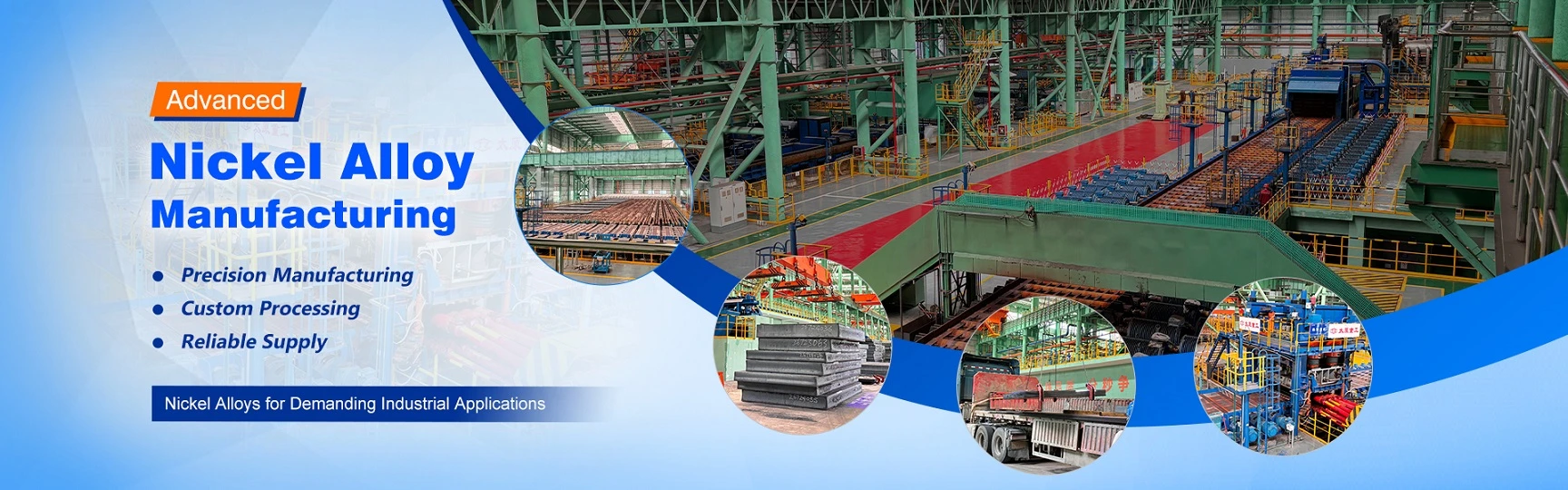
Gnee Steel is a professional manufacturer of Inconel 718 products. Gnee Steel's 718 alloy products are packaged in various ways, including: steel strapping: pipes with an outer diameter not exceeding 3 inches are typically bundled together with polypropylene film to prevent rusting during sea transport, then secured with steel straps; wooden crates/crates: pipes are usually packaged in wooden crates or crates for protection during transport, especially for longer or larger diameter pipes; seaworthy export packaging: suppliers typically use standard seaworthy export packaging methods, which may include various materials and techniques to protect the pipes during transport; and tarpaulin packaging: to prevent rainwater, seawater, etc., from seeping into the export wooden crate packaging during transport. Gnee Steel specializes in the production and sales of alloy materials. Gnee Steel's products are widely used in aerospace, chemical, power, automotive, and nuclear energy fields, and customized alloy material solutions can be provided according to customer needs.
Inconel 625 or 718 pipes – which one is best suited for your application?

Inconel 625 or 718 pipes – which one is best suited for your application?
Both Inconel 625 and 718 tubing are high-performance nickel-based superalloys, but their strengthening mechanisms and applications differ significantly. Inconel 625 tubing is a solid solution alloy, renowned for its excellent corrosion resistance and good weldability; while Inconel 718 alloy tubing is a precipitation-hardening alloy, designed specifically for superior strength at high temperatures.
What are the disadvantages of Inconel 718?
Disadvantages and alternatives of Inconel 718
While Inconel 718 boasts excellent mechanical and corrosion resistance properties, it also has some drawbacks: High cost: Due to its complex manufacturing process, Inconel 718 is expensive. Difficult to process: Its high hardness makes material removal difficult and accelerates tool wear.

What is Inconel 625 pipe?
Nickel and chromium are the main components of Inconel 625. Molybdenum and niobium give it high tensile strength and corrosion resistance, especially resistance to crevice corrosion. Niobium and molybdenum give it excellent strength at both low and high temperatures. According to the technical bulletin, Inconel 625 pipes have good oxidation and carburization resistance and maintain strength at temperatures up to 2000°F (1093°C). With a few minor differences, the chemical composition of Inconel 718 and Inconel 625 pipes is essentially the same.
What is Inconel 718 alloy tubing?
The unique feature of Inconel 718 is that it does not exhibit post-weld cracking after precipitation hardening. It also resists creep rupture at 1300°F (716°C). Due to this property, Inconel 718 combines good formability with high tensile strength and other alloying characteristics.
Due to its excellent weldability, Inconel 718 tubing is similar to common stainless steel grades in many ways. On the other hand, Inconel 625 tubing in the annealed state is significantly stronger and, as mentioned earlier, is particularly suitable for resisting corrosion, including corrosion caused by seawater conditions.
Chemical composition of Inconel 625 and 718 pipes
| Element | Inconel 625 (typical wt%) | Inconel 718 (typical wt%) |
|---|---|---|
| Nickel (Ni) | ~58.0 – 63.0 | ~50 – 55 |
| Chromium (Cr) | ~20.0 – 23.0 | ~17 – 21 |
| Iron (Fe) | Balance to ~10 – 20 | ~17 – 21 (balance) |
| Molybdenum (Mo) | ~8.0 – 10.0 | ~2.5 – 3.5 |
| Niobium + Tantalum (Nb+Ta, often reported as Nb) | ~3.6 – 4.2 | ~4.0 – 5.5 |
| Cobalt (Co) | trace to ~1 | ~1 – 1.5 (varies) |
| Aluminum (Al) | trace | ~0.2 – 0.8 |
| Titanium (Ti) | trace | ~0.6 – 1.2 |
| Carbon (C) | ≤ 0.10 | ≤ 0.08 – 0.10 (depending on spec) |
| Manganese (Mn), Silicon (Si), Sulfur (S), Phosphorus (P) | low ppm typical | low ppm typical |
Differences in Formability between Inconel 625 and Inconel 718 Tubing:
Due to their high nickel content, both Inconel alloys exhibit extremely high formability. Both Inconel 625 and 718 alloy tubing can be cold-formed and stamped. While both materials possess excellent tensile strength, Inconel 718 tubing is particularly well-suited for forming, maintaining high strength even in the annealed state thanks to its resistance to post-weld or strain-aging cracking during heat treatment.
Due to the excellent formability of Inconel alloys, these materials can be rolled into wire rods of various specifications using wire mills for applications in industries such as aerospace and oil and gas. Furthermore, they can be used to manufacture bellows, springs, sealing rings, and honeycomb structures. They are also suitable as high-performance fastener alloys for harsh environments such as corrosive conditions.
Inconel 625 vs 718 Material Properties

| Properties | Inconel 625 | Inconel 718 |
|---|---|---|
| Melting Range | 2350-2460°F (1290-1350°C) | 2300-2437°F (1260-1336°C) |
| Curie Temperature | -320°F (-196°C) |
-320°F (-196°C) (Annealed) 170°F (-112°C) (Annealed and Aged) |
| Density | 0.305lb/cu (8.44gram/cc) |
0.296 (Annealed) 0.297 (Annealed and Aged) |
| Permeability at 200 | 1.0006 |
1.0013 (Annealed) 1.0011(-112°C) (Annealed and Aged) |
| Specific Heat 70°F at( 21°) | 0.098 (410) | 0.104 (435) |
Industries using Inconel 625 and 718 tubing:
Inconel 718 tubing was initially used in the aerospace industry and has since expanded throughout the entire aerospace sector. One study indicates that this alloy accounts for over 30% of the mass of finished components in modern aircraft engines. For a high-temperature alloy capable of withstanding the extreme pressures, corrosive environments, and thrust generated by jet fuel combustion, aircraft engines are undoubtedly an ideal application area.
Automotive engine component alloys also face similar high-stress conditions. The nickel content gives this high-temperature alloy excellent formability, making it highly beneficial in numerous engine components. Inconel alloys maintain the strong corrosion resistance required to ensure long-term durability while meeting the unique shape requirements of automotive engine applications.
Due to its corrosion resistance, Inconel 625 tubing also has wide applications in the marine industry, especially in saline environments. This meets the needs of the oil and gas industry, such as for subsea pipeline reconnections in downhole drilling. Other products, such as communication cables, propeller blades, and wire ropes, can be manufactured using Inconel 625 and used in seawater environments.

About Gnee Steel
Gnee Steel is a professional manufacturer of nickel-based alloys, including Nickel 201, Nickel 202, Hastelloy C-276, Hastelloy C-22, Hastelloy B, Hastelloy C-4, Inconel 600, Inconel 625, Inconel 718, Inconel X-750, Incoloy 800, Incoloy 800H/HT, Incoloy 825, Monel 400, Monel K500, and other high-temperature alloy materials. We specialize in the production and sales of alloy materials. Gnee Steel's products are widely used in aerospace, chemical, power generation, automotive, nuclear energy, and other fields, and we can provide customized alloy material solutions according to customer needs. For inquiries about alloy material prices or customized alloy material solutions, please feel free to contact us via email at ss@gneemetal.com for a quote.
Square Meters Built
Enterprise Employees
Years Experience
Partner countries


