

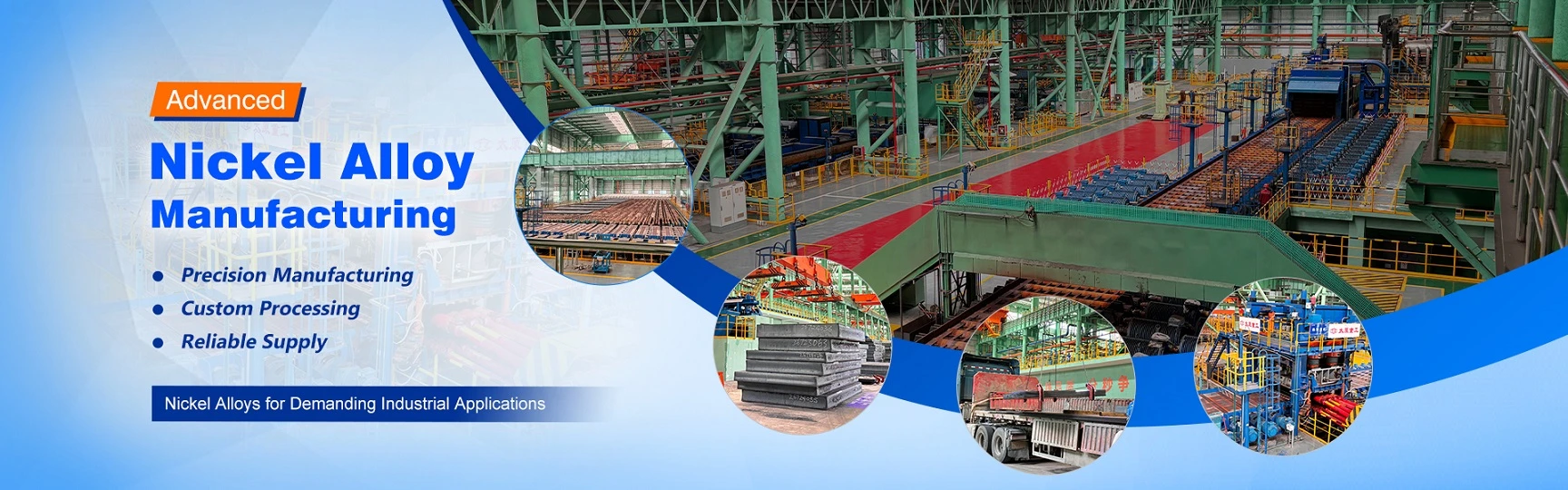
GH4169 Bar production process

GH4169 Bar production process
The production of GH4169 bars employs a special triple melting process (vacuum ion melting + electroslag remelting + vacuum argon arc welding) to ensure high purity, followed by precise thermomechanical hot forging to control the microstructure, particularly promoting δ-phase precipitation to refine the grain size. This process includes homogenization treatment, forging, multi-stage forging, and a final standard heat treatment to obtain high-strength, fine-grained bars.
What is the composition of GH4169 alloy?
The chemical composition of GH4169 alloy is as follows: Ni 53.44%, Cr 18.56%, Mo 3.02%, Nb 5.3%, Al 0.44%, Ti 1.04%, C 0.026%, P 0.005%, S 0.001%, B 0.002%, Fe balance (weight percentage).

1. Overview of GH4169 Alloy Rod
| Parameter | Description |
|---|---|
| Material | GH4169 (UNS N07718 / Inconel 718) |
| Product Form | Round Bar, Square Bar, Hex Bar |
| Material Type | Wrought Nickel-based Superalloy |
| Strengthening Mechanism | γ″ + γ′ precipitation hardening |
| Manufacturing Process | Hot Rolled / Forged / Cold Drawn + Ground |
| Surface Condition | Black (hot rolled/forged) or Bright (cold drawn/ground) |
| Applicable Standards | AMS 5662, AMS 5663, ASTM B637, GB/T 14994, GB/T 14997, GB/T 14998 |
| Typical Applications | Turbine discs, compressor blades, high-strength fasteners, shafts, structural components |
| Maximum Service Temperature (Load-Bearing) | 650 – 700°C |
2. Chemical composition of GH4169 Bar (wt%)
| Element | Content (%) | Function |
|---|---|---|
| Nickel (Ni) | 50.0 – 55.0 | Matrix element; high-temperature stability |
| Chromium (Cr) | 17.0 – 21.0 | Oxidation and corrosion resistance |
| Iron (Fe) | Balance (~18-20) | Fe-Ni-Cr base alloy |
| Niobium (Nb) | 4.75 – 5.50 | Core strengthening element – forms γ″ phase (Ni₃Nb) |
| Molybdenum (Mo) | 2.80 – 3.30 | Solid-solution strengthening; creep resistance |
| Titanium (Ti) | 0.65 – 1.15 | Forms γ′ strengthening phase (Ni₃(Al,Ti)) |
| Aluminum (Al) | 0.20 – 0.80 | Forms γ′ strengthening phase; improves oxidation resistance |
| Carbon (C) | ≤ 0.08 | Low carbon for toughness |
| Manganese (Mn) | ≤ 0.35 | Deoxidizer |
| Silicon (Si) | ≤ 0.35 | Deoxidizer |
| Phosphorus (P) | ≤ 0.015 | Ensures toughness |
| Sulfur (S) | ≤ 0.015 | Ensures hot workability |
| Boron (B) | 0.002 – 0.006 | Grain boundary strengthener |
| Cobalt (Co) | ≤ 1.00 | Residual element |
| Copper (Cu) | ≤ 0.30 | Residual element |
Click to download the GH4169 alloy PDF file now
3. Room temperature mechanical properties of GH4169 alloy rod
Solution treatment + aging condition (hard - recommended for repair)
| Property | Value | Test Standard |
|---|---|---|
| Tensile Strength, Ultimate (Rm) | ≥ 1275 MPa (185 ksi) | ASTM E8 / AMS 2370 |
| Tensile Strength, Yield (Rp0.2) | ≥ 1035 MPa (150 ksi) | ASTM E8 / AMS 2370 |
| Elongation at Break (A) | ≥ 12% (4D or 50mm) | ASTM E8 / AMS 2370 |
| Reduction of Area (Z) | ≥ 15% | ASTM E8 |
| Hardness (Rockwell C) | 35 – 40 HRC | ASTM E18 |
| Modulus of Elasticity (E) | ~200 GPa (29.0 × 10⁶ psi) | ASTM E111 |
| Poisson's Ratio (ν) | 0.29 – 0.30 | – |
| Impact Toughness (Charpy V-notch, RT) | ≥ 20 J | ASTM E23 |
Solution Treated Condition (Soft – for Machining)
| Property | Value |
|---|---|
| Tensile Strength, Ultimate | ≥ 965 MPa (140 ksi) |
| Tensile Strength, Yield | ≥ 550 MPa (80 ksi) |
| Elongation at Break | ≥ 30% |
| Hardness (Rockwell C) | ≤ 24 HRC |
GH4169 Bar Standard Process: Dual Melting of VIM and VAR

Stage 1: Vacuum Induction Melting (VIM)
Process Flow: The raw material is melted in a high-vacuum chamber.
Purpose: To remove dissolved oxygen, nitrogen, and hydrogen. This allows for the precise addition of active elements such as niobium and titanium without introducing atmospheric pollution.
Stage 2: Vacuum Arc Remelting (VAR)
Process Flow: The VIM-melted ingot is used as an electrode for remelting under a vacuum arc.
Purpose: This is a crucial step in solving the "spotting" problem. The controlled solidification process eliminates macroscopic segregation and removes all residual non-metallic inclusions, resulting in a dense and uniform grain structure.

6. Gnee Alloy GH4169 Bar Forging and Non-Destructive Testing
As a reliable supplier, Gnee Alloy ensures the internal integrity of its GH4169 forged bars through the following methods:
High forging ratio (≥ 4:1): Ensures complete recrystallization, with grain refinement to ASTM E112 Grade 8 or finer.
100% Non-Destructive Testing: Each bar undergoes ultrasonic testing (UT) according to AMS 2154 Grade A standards.
Traceability: Each batch is marked with a heat number and accompanied by an EN 10204 3.1 Factory Inspection Certificate (MTC).
Why do global OEMs choose to partner with our Gnee Alloy factory?
✅️Direct Factory Price: Eliminate middleman markups and secure the best Wholesale Pricing for bulk aerospace and energy projects.
✅️Certified Manufacturing: Fully compliant with AS9100D and ISO 9001 aerospace quality management systems.
✅️Wholesale Inventory: Large stock of triple-melted bars and plates ready for Fast Global Shipping.
✅️Custom Fabrication: We provide precision cutting, centerless grinding, and custom forgings tailored to your blueprints.

Gnee Alloy GH4169(inconel 718) Certificate
📦 Packaging and Shipping
All Nickel Based Alloy products are packaged using the following methods:
Wooden pallets or crates
Moisture-proof packaging
Labels with furnace number, standard, and size labels
Shipped worldwide by sea, air, or express
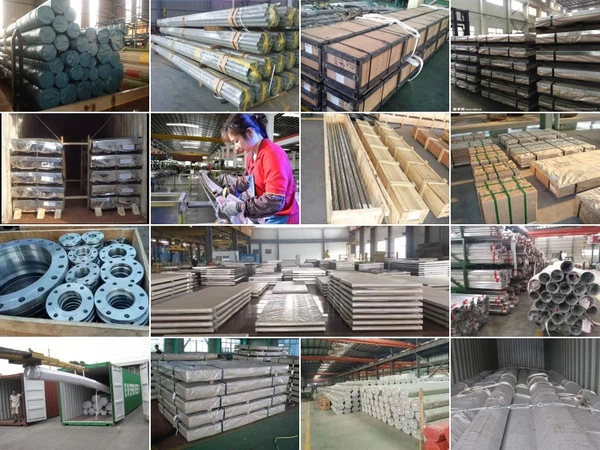
Gnee Alloy GH4169 Product Packing
Contact us for the latest export price quote for GH4169 Alloy
FAQ
Q1: Why is VIM+VAR mandatory for rotating turbine parts?
A: Centrifugal stress is extreme. Standard alloys may contain microscopic inclusions that cause a rotating shaft or disc to burst at high RPM. VIM+VAR is the only process that provides the metallurgical cleanliness required to ensure flight safety.
Q2: Is GH4169 interchangeble with Inconel 718 in your process?
A: Yes. GH4169 is the technische equivalent to UNS N07718. Our manufacturing route meets all international requirements for AMS 5662, AMS 5596, and ASTM B637.
Q3: How do you prevent "Centerline Porosity" in large diameter bars?
A: We manage this through a combination of controlled VAR solidification and a high forging reduction ratio. By ensuring a minimum 4:1 deformation, we "heal" any internal voids, ensuring a 100% dense core.
Q4: Do you support third-party witness testing during production?
A: Absolutely. We welcome inspections from SGS, TUV, or BV to verify our melting and testing processes before dispatch.


