


Comparison of the properties of Nickel 600 and AISI 316 stainless steel
Nickel 600 is a nickel alloy with excellent high-temperature strength and corrosion resistance, particularly excelling in resistance to oxidation and chloride stress corrosion cracking; while AISI 316 is a stainless steel that offers better value for money and good overall corrosion resistance, making it particularly suitable for low-temperature marine or acidic environments. The main trade-off between the two lies in performance and cost under extreme conditions.
What are the uses of Inconel 600?
Inconel 600 alloy is used in the electronics industry to manufacture components such as cathode ray tube supports, thyristor grids, tube supports, and springs. This alloy is also a standard structural material for nuclear reactors.

What is Inconel 600?
Inconel 600 is a unique nickel-chromium-iron alloy renowned for its excellent oxidation resistance at high temperatures and superior strength and corrosion resistance in acidic and alkaline environments. It can withstand temperatures up to 2000°F (1093°C), making it ideal for applications such as furnaces, exhaust systems, and turbines.
What is 316 Stainless Steel?
On the other hand, 316 stainless steel is an alloy primarily composed of chromium, nickel, and molybdenum. Due to its extremely thin chromium oxide layer on the surface, it exhibits superior corrosion resistance compared to other steels. Furthermore, its strength is enhanced by the addition of molybdenum. However, its maximum operating temperature is relatively low, reaching only 1500°F (816°C).
High Temperature Resistance Comparison: AISI 316 Stainless Steel vs Nickel 600
| Property | AISI 316 Stainless Steel (UNS S31600) | Nickel 600 (UNS N06600) |
|---|---|---|
| Maximum Continuous Service Temperature (Oxidizing Atmosphere) | ≈ 870 °C (1600 °F) | ≈ 1095 °C (2000 °F) |
| High Temperature Strength Retention (at 600°C) | ≈ 40% of room temperature strength | ≈ 65% of room temperature strength |
| Creep Resistance (at 700°C) | Poor; not recommended for long-term load-bearing applications | Good; suitable for sustained load applications |
| Oxidation Resistance (in Air) | Forms protective Cr₂O₃ layer up to ~870°C; severe scaling above 900°C | Forms stable Cr₂O₃/NiO layer up to ~1095°C; excellent scaling resistance |
| Carburization Resistance | Moderate; can be attacked in carburizing atmospheres above 650°C | Good; resistant to carburization up to ~980°C |
| Sulfidation Resistance | Poor in sulfur-containing atmospheres above 500°C | Good; suitable for moderate sulfur environments up to ~870°C |
| Thermal Fatigue Resistance | Moderate; prone to cracking under severe thermal cycling | Excellent; good resistance to thermal shock and cyclic heating/cooling |
| Chloride Attack at High Temperature | Susceptible to stress corrosion cracking above 60°C in chloride environments | Highly resistant to chloride stress corrosion cracking even at high temperatures |
| Structural Stability at High Temperature | May sensitize (chromium carbide precipitation) in 450–850°C range | Stable; low carbon version minimizes sensitization |
| Recommended Max Temperature for Load-Bearing Applications | ≈ 540 °C (1000 °F) | ≈ 980 °C (1800 °F) |
| High Temperature Embrittlement Risk | Possible above 600°C due to sigma phase formation (slow cooling) | Low risk; stable austenitic structure |
| Thermal Expansion Coefficient (20–100°C) | 16.0 μm/m·°C | 13.3 μm/m·°C |
| Thermal Conductivity (100°C) | 16.3 W/m·K | 14.8 W/m·K |
| Softening Temperature (Annealing Range) | 1010–1120 °C (1850–2050 °F) | 1095–1205 °C (2000–2200 °F) |
| Continuous Use in Reducing Atmospheres | Limited above 400°C | Good performance up to ~870°C |
| Maximum Intermittent Service Temperature | Up to 925 °C (1700 °F) for short periods | Up to 1150 °C (2100 °F) for short periods |
Corrosion Resistance Comparison: AISI 316 Stainless Steel vs Nickel 600
| Corrosion Type / Environment | AISI 316 Stainless Steel (UNS S31600) | Nickel 600 (UNS N06600) |
|---|---|---|
| General Atmospheric Corrosion | Excellent | Excellent |
| Fresh Water / Neutral Aqueous | Excellent | Excellent |
| Seawater / Marine Environments | Good (but may pit/crevice in stagnant or warm water) | Excellent (highly resistant to pitting and crevice corrosion) |
| Chloride Stress Corrosion Cracking (SCC) | Susceptible above 60°C (140°F) | Highly resistant (one of the best nickel alloys for chloride SCC) |
| Pitting Resistance Equivalent Number (PREN) | ~25–27 | ~18–20 |
| Oxidizing Acids | Excellent in nitric acid (< 20% concentration) | Excellent in all concentrations of nitric acid |
| Reducing Acids | Poor in hydrochloric, sulfuric, phosphoric acids | Good in dilute hydrochloric, sulfuric, and phosphoric acids |
| Organic Acids | Excellent (acetic, citric, formic, etc.) | Excellent |
| Alkaline Solutions | Good (except in hot concentrated caustics with SCC risk) | Excellent (including hot concentrated caustics without SCC) |
| High-Temperature Oxidation | Good up to 870°C (1600°F) | Excellent up to 1095°C (2000°F) |
| Carburizing Atmospheres | Moderate resistance | Good resistance |
| Sulfidizing Atmospheres | Poor above 500°C (930°F) | Good up to 870°C (1600°F) |
| Ammonia / Amine Environments | Good (but risk of stress corrosion in hot concentrated ammonia) | Excellent (resistant to ammonia stress corrosion) |
| Chlorine / Hypochlorite | Moderate (dilute, room temperature) | Excellent (including dry chlorine at high temperature) |
| Hydrogen Sulfide (H₂S) Sour Service | Limited (prone to sulfide stress cracking in severe conditions) | Good (used in moderate sour service) |
| Intergranular Corrosion | May sensitize in 450–850°C range (welded structures) | Low carbon grades available to prevent sensitization |
| Galvanic Corrosion | Anodic to nickel alloys; may corrode when coupled | Cathodic; can accelerate corrosion of stainless steel when in contact |
| Erosion-Corrosion | Good in moderate flows | Excellent in high-velocity and abrasive flows |
| Specific Chemical Media | ||
| • Nitric Acid (65%, boiling) | Good (but may corrode at higher concentrations) | Excellent |
| • Hydrochloric Acid (10%, 25°C) | Poor (rapid corrosion) | Moderate (usable in aerated dilute solutions) |
| • Sulfuric Acid (10%, 25°C) | Poor | Good (in aerated conditions) |
| • Phosphoric Acid (85%, 25°C) | Good | Excellent |
| • Acetic Acid (glacial, boiling) | Excellent | Excellent |
| • Sodium Hydroxide (50%, boiling) | Fair (risk of SCC) | Excellent |
Mechanical Properties Comparison: AISI 316 Stainless Steel vs Nickel 600
| Property | AISI 316 Stainless Steel (UNS S31600) | Nickel 600 (UNS N06600) |
|---|---|---|
| Tensile Strength (Room Temp) | 515 – 620 MPa | 550 – 690 MPa |
| Yield Strength (0.2% Offset, Room Temp) | 205 – 310 MPa | 240 – 350 MPa |
| Elongation | ≥ 40 % | ≥ 30 % |
| Reduction in Area | ≥ 50 % | ≥ 45 % |
| Hardness (Annealed) | 150 – 200 HB | 65 – 90 HRB |
| Modulus of Elasticity | 193 GPa | 207 GPa |
| Fatigue Strength (Rotating Beam) | 240 – 280 MPa | 270 – 310 MPa |
| Shear Strength | ≈ 400 MPa | ≈ 520 MPa |
| Impact Toughness (Charpy V-Notch, Room Temp) | > 100 J | > 100 J |
| High-Temperature Tensile Strength (600°C) | ≈ 200 MPa | ≈ 350 MPa |
| High-Temperature Yield Strength (600°C) | ≈ 120 MPa | ≈ 180 MPa |
| Creep Rupture Strength (700°C, 1000h) | ≈ 25 MPa | ≈ 60 MPa |
| Maximum Continuous Service Temperature | ≈ 870 °C | ≈ 1095 °C |
| Minimum Service Temperature | ≈ -250 °C | ≈ -250 °C |
| Thermal Expansion Coefficient (20–100°C) | 16.0 μm/m·°C | 13.3 μm/m·°C |
| Thermal Conductivity (100°C) | 16.3 W/m·K | 14.8 W/m·K |
| Specific Heat Capacity (20°C) | 500 J/kg·K | 460 J/kg·K |
| Density | 8.00 g/cm³ | 8.47 g/cm³ |
| Poisson's Ratio | 0.29 | 0.29 |
| Work Hardening Rate | Moderate | High (rapid work hardening) |
| Machinability (Compared to Free-Cutting Steel) | 60% | 40% |
Application Comparison: AISI 316 Stainless Steel vs Nickel 600
| Application Field | AISI 316 Stainless Steel (UNS S31600) | Nickel 600 (UNS N06600) |
|---|---|---|
| Chemical Processing | Tanks, piping, valves for mild acids and chlorides | Reactors, heat exchangers, columns for aggressive acids, alkalis, and chlorides |
| Pharmaceutical & Biotechnology | Fermenters, purification systems, cleanroom equipment | High-temperature sterilization autoclaves, reaction vessels |
| Food & Beverage | Brewing tanks, dairy equipment, food processing lines | Limited use; high-temperature cooking/frying equipment |
| Marine & Offshore | Boat fittings, deck hardware, desalination components | Seawater heat exchangers, condenser tubes, offshore platform critical parts |
| Architecture & Construction | Facades, railings, coastal structures | Specialized cladding in highly corrosive industrial atmospheres |
| Medical Devices | Implants, surgical tools, diagnostic equipment | High-temperature medical sterilizers, radiation equipment parts |
| Automotive | Exhaust systems, trim, fuel lines | High-performance exhaust manifolds, turbocharger components |
| Aerospace | Interior panels, fasteners, fuel tanks | Engine mounts, exhaust ducts, turbine components |
| Nuclear Industry | General piping, supports, waste containers | Steam generator tubing, reactor internals, control rod drives |
| Heat Treatment Equipment | – | Furnace muffles, retorts, radiant tubes, annealing covers |
| Oil & Gas | Surface piping, storage tanks, offshore structures | Wellhead components, downhole tools, sour service equipment |
| Power Generation | Cooling systems, boiler feedwater pipes | Boiler tubes, superheaters, turbine diaphragms |
| Pulp & Paper | Bleaching equipment, digesters, paper machine parts | Recovery boiler tubes, black liquor evaporators |
| Textile Industry | Dyeing tanks, rollers, steam chambers | High-temperature calender rolls, heat setting frames |
| Semiconductor | Wafer carriers, wet benches, gas panels | High-temperature furnace tubes, diffusion chambers |
| Water Treatment | Filters, pipes, pumps for potable and wastewater | Seawater desalination evaporator tubes, brine heaters |
| Cryogenics | LNG tanks, cryogenic pipelines, storage vessels | LNG pump shafts, cryogenic valve stems, transfer lines |
| Welding & Cladding | Common filler metal for stainless steel welding | Cladding overlay for corrosion protection on carbon steel |
| Pollution Control | Exhaust ducts, scrubbers for mild gases | FGD systems, incinerator liners, harsh flue gas ducts |
Why Choose Gnee as Your Nickel-Based Alloy Supplier
✅ Over 18 years of export experience, products sold to more than 80 countries
✅ Certified by ISO, SGS, and BV
✅ Global inventory of Inconel, Hastelloy, Incoloy, and Monel alloy tubing, plates, and bars
✅ Custom processing services available – including cutting, polishing, CNC machining, and packaging
✅ Fast delivery within 7-15 days, supported by global logistics partners
📦 Packaging and Shipping
All stainless steel products are packaged using the following methods:
Wooden pallets or crates
Moisture-proof packaging
Labels with furnace number, standard, and size labels
Shipped worldwide by sea, air, or express
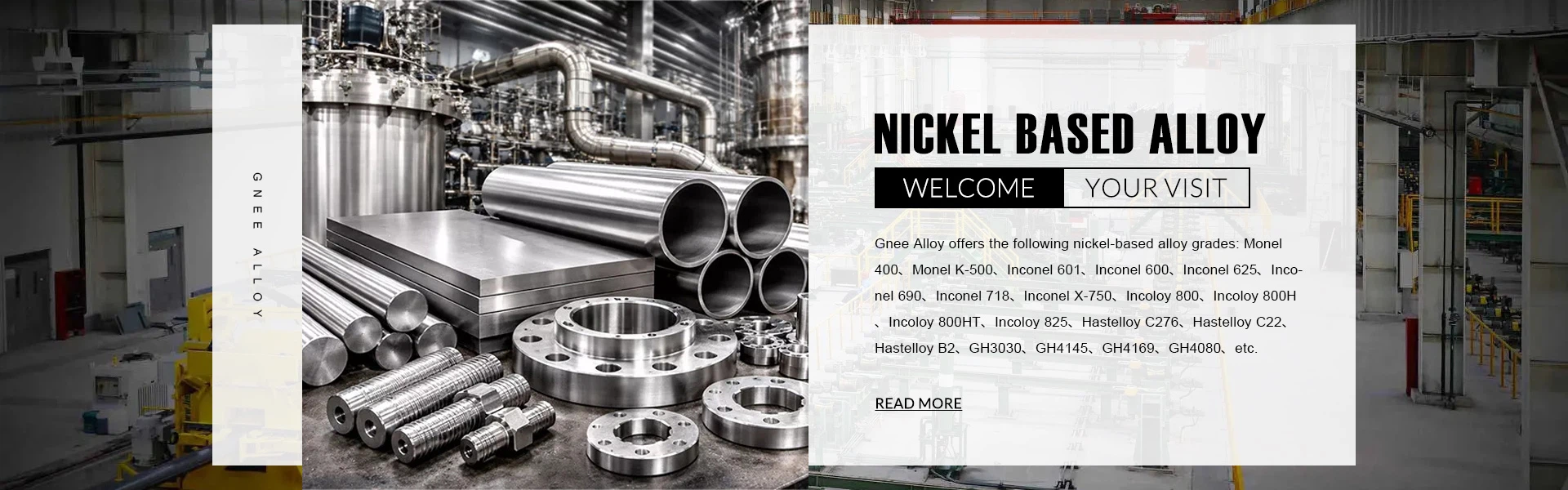
Gnee Steel is a supplier of Nickel 600 alloy, offering a wide range of products including: seamless pipe (sizes: 4-219 mm; thickness: 0.5-20 mm); welded pipe (sizes: 5.0-1219.2 mm; thickness: 0.5-20 mm); plates (thickness: 0.1 to 100 mm; width: 10-2500 mm); strips; alloy round bars (diameter: 3-800 mm); flat bars (thickness: 2-100 mm; width: 10-500 mm); hexagonal bars (size: 2-100 mm); wire rods; and extruded profiles. We collaborate with steel mills to provide our customers with Nickel 600 alloy products that meet or exceed numerous leading industry standards, including ASTM, ASME, SAE, AMS, ISO, DIN, EN, and BS standards.
Gnee Steel stocks and sells Nickel 600, pipes, plates, strips, round bars, flat bars, forged billets, hexagonal steel, wire rods, and extruded profiles. Please feel free to contact us at ss@gneesteel.com for a quote.


