

In the high-temperature alloy market, a common and potentially disastrous mistake is selecting materials solely based on the "high-temperature" label, ignoring the analysis of the chemical environment.
Pain Point: We've witnessed equipment fail within weeks simply because the buyer chose the top-tier alloy GH4169 (718 alloy) for a high-acid environment, merely because it's the "strongest alloy." Conversely, using Hastelloy C276 in high-speed rotating turbine components will cause immediate deformation due to its lack of necessary mechanical stiffness at high temperatures.
Choosing between GH4169 and C276 isn't about which is "better," but about balancing mechanical load and chemical corrosion. At Gnee Alloy, we offer technical material selection audits to ensure your industrial durability and project ROI.
Contact our professionals to recommend the right alloy for your project
Alloy GH4169 VS Alloy C276: What's The Difference
Alloy GH4169 VS Alloy C276: What's The Difference
GH4169 alloy (commonly known as Inconel 718) and C276 alloy (Hastelloy C-276) are both high-performance nickel-based alloys, but they are designed for very different purposes. The main difference is that GH4169 is a high-strength precipitation-strengthened alloy designed for high-temperature structural integrity, while C276 is a solid solution-strengthened alloy that focuses on optimal corrosion resistance.
What are the equivalent materials for Hastelloy C276?
Equivalent materials for Hastelloy C276: Hastelloy C276 pipe is a corrosion-resistant alloy, and its equivalent materials include UNS N10276, WNR 2.4819, and ASTM B622. These materials have similar corrosion resistance and high-temperature resistance.

Key information on GH4169 (Inconel 718) alloy and Hastelloy C276 alloy
GH4169 (Inconel 718) Alloy
GH4169 is a precipitation-hardening nickel-chromium superalloy. Its "super strength" lies in the γ′′ (γ′) phase, making it one of the strongest materials usable below 700°C.
Key Advantages: Excellent mechanical load-bearing capacity. It maintains its yield strength even under strong centrifugal forces or internal pressure.
Limitations: While possessing good oxidation resistance, it is not suitable for concentrated hydrochloric acid or concentrated sulfuric acid.
Best Applications: Aircraft engine discs, high-pressure fuel lines, turbine shafts, and high-strength springs.


2. Hastelloy C276 (UNS N10276) Alloy
Hastelloy C276 is a solid solution-strengthened alloy with high molybdenum (16%) and tungsten content. It is the gold standard for resistance to pitting and localized corrosion.
Key Advantages: Extreme corrosion resistance. It is virtually unaffected by chloride stress corrosion cracking and strong oxidizing salts.
Limitations: It lacks the aging stage of GH4169, meaning its mechanical strength decreases significantly above 500°C.
Most suitable applications: Chemical reactors, flue gas desulfurization (FGD), pharmaceutical equipment, and acid gas (H2S) transport.

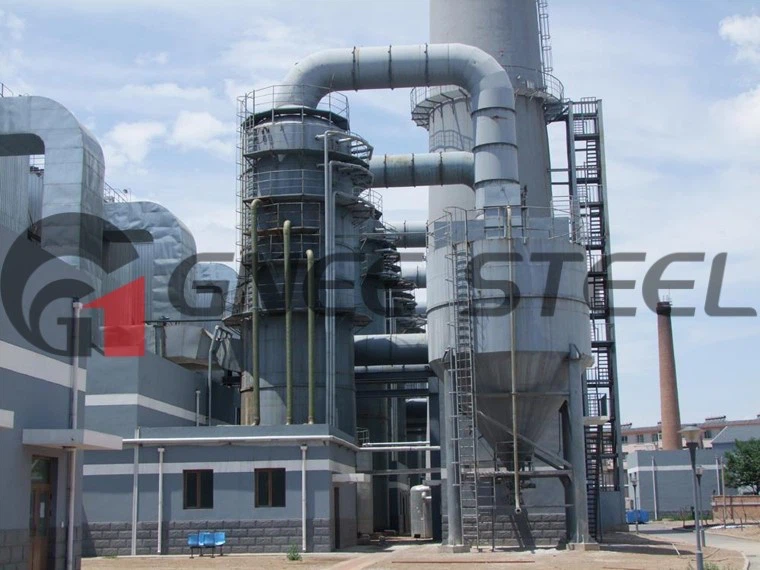


3. Comparison of chemical composition (wt%) of Alloy GH4169 and Hastelloy C276 alloy
| Element | GH4169 (Inconel 718) | Hastelloy C-276 | Key Difference |
|---|---|---|---|
| Nickel (Ni) | 50.0 – 55.0 | 57.0 min (Balance) | C-276 has slightly higher Ni |
| Chromium (Cr) | 17.0 – 21.0 | 14.5 – 16.5 | GH4169 higher Cr |
| Molybdenum (Mo) | 2.80 – 3.30 | 15.0 – 17.0 | C-276 has 5x more Mo |
| Iron (Fe) | Balance (~18-20) | 4.0 – 7.0 | GH4169 has much higher Fe |
| Tungsten (W) | – | 3.0 – 4.5 | C-276 unique |
| Niobium (Nb) | 4.75 – 5.50 | – | GH4169 unique – γ″ former |
| Titanium (Ti) | 0.65 – 1.15 | – | GH4169 unique |
| Aluminum (Al) | 0.20 – 0.80 | – | GH4169 unique |
| Cobalt (Co) | ≤ 1.00 | ≤ 2.5 | C-276 may have more |
| Carbon (C) | ≤ 0.08 | ≤ 0.01 | C-276 much lower |
| Vanadium (V) | – | ≤ 0.35 | C-276 unique |
| Manganese (Mn) | ≤ 0.35 | ≤ 1.0 | C-276 higher |
| Silicon (Si) | ≤ 0.35 | ≤ 0.08 | GH4169 higher |
| Phosphorus (P) | ≤ 0.015 | ≤ 0.04 | GH4169 stricter |
| Sulfur (S) | ≤ 0.015 | ≤ 0.03 | GH4169 stricter |
| Boron (B) | 0.002 – 0.006 | – | GH4169 unique |
| Copper (Cu) | ≤ 0.30 | – | – |
Click to download the GH4169 alloy PDF file now
4. Comparison of physical properties of GH4169 alloy and Hastelloy C276 alloy
| Property | GH4169 (718) | Hastelloy C-276 |
|---|---|---|
| Density | 8.19 g/cm³ | 8.89 g/cm³ |
| Melting Range | 1260 – 1336°C | 1323 – 1371°C |
| Thermal Conductivity (20°C) | 11.4 W/m·K | 11.1 W/m·K |
| Coefficient of Thermal Expansion (20-100°C) | 13.0 × 10⁻⁶/°C | 11.2 × 10⁻⁶/°C |
| Specific Heat (20°C) | 435 J/kg·K | 427 J/kg·K |
| Electrical Resistivity | 1.25 µΩ·m | 1.30 µΩ·m |
| Magnetic Properties | Slightly magnetic | Non-magnetic |
5. Comparison of GH4169 and C276 technologies
| Feature | GH4169 (Inconel 718) | Hastelloy C276 (Alloy C276) | Industrial Impact |
| Strengthening Method | Precipitation (High Strength) | Solid Solution (High Purity) | GH4169 carries more weight. |
| PREN Value (Pitting) | ~ 31 | **~ 45 - 52 (Superior)** | C276 won't perforate in acid. |
| Yield Strength (MPa) | ≥ 1030 MPa | ≥ 355 MPa | GH4169 is 3x stronger. |
| Max Service Temp (Load) | 700°C (1292°F) | 400°C - 500°C (Varies) | GH4169 for structural heat. |
| Acid Resistance | Moderate | Elite (HCl, H2SO4) | C276 is mandatory for chemicals. |
| Commercial Role | Aero-engine / Energy | Chemical / Petro / Marine | Match the alloy to the failure mode. |
6. Choosing Between GH4169 and Hastelloy C276
If you are designing a system that can withstand extreme internal pressure or centrifugal forces up to 700°C, choose GH4169 tubing/bars. If your components cannot experience "stretching" or "creep" under load, GH4169 is your only cost-effective solution.
If you are designing a system that can withstand ferric chloride/copper chloride, high-temperature contaminated media, or wet chlorine, choose Hastelloy C276 tubing/bars. In this case, preventing pitting and stress corrosion cracking is paramount to ensuring industrial durability.
Contact us to customize GH4169 products to fit your project dimensions
Why choose a Tier 1 manufacturer like Gnee Alloy?
Whether your project requires the elite strength of 718 or the chemical stability of C276, we ensure Zero-Defect quality:
✅️VIM + VAR Melting: Double-vacuum refining ensures the ultra-pure chemistry required for both high-load and high-corrosion service.
✅️MTC 3.1 Traceability: Full heat analysis and mechanical verification (EN 10204 3.1) included with every batch.
✅️Wholesale Inventory: We maintain a massive stock of both grades in Seamless Pipe, Sheet, and Round Bar forms.
✅️Custom Fabrication: We offer precision cutting, centerless grinding (h8-h11), and custom bending services to match your drawings.

Gnee Steel GH4169(inconel 718) Certificate
📦 Packaging and Shipping
All Nickel Based Alloy products are packaged using the following methods:
Wooden pallets or crates
Moisture-proof packaging
Labels with furnace number, standard, and size labels
Shipped worldwide by sea, air, or express
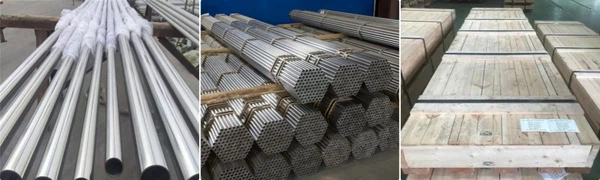
Gnee Steel GH4169 Product Packing
Contact us for the latest export price quote for GH4169 Alloy
FAQ
Q1: Can GH4169 replace C276 in an offshore sour gas environment?
A: Only if the temperature is extremely high and load is critical. However, for standard sour gas (H2S), C276 is generally the safer and more durable choice unless the specific yield strength requirements force a move to GH4169 (which must then be heat-treated to meet NACE MR0175).
Q2: Which alloy has better weldability?
A: Both are excellent. GH4169 is famous for being the most "Weld-Friendly" superalloy due to its delayed aging. C276 is also widely welded in chemical plant construction without the need for post-weld heat treatment in most cases.
Q3: Why is GH4169 more expensive than C276 for tubing?
A: GH4169 requires a much more complex Double-Aging heat treatment (16 hours total) to reach its mechanical potential, adding significant processing time and cost compared to the solid-solution C276.
Q4: Do you provide corrosion coupons for testing?
A: Yes. We support R&D and pilot plants by providing small GH4169 and C276 coupons for site corrosion testing before you commit to a full wholesale order.


